What It Is For
The Couch Stretch targets the tissues at the front of the hip and thigh. The person kneels with the back knee in the angle between floor and wall, the shin running up the wall, and the other foot stepped forward. Writers on running describe it as a stretch for the hip flexors, the quadriceps and the tensor fasciae latae.[1]
Coaches use it for hip extension, the ability to take the thigh behind the body. Kelly Starrett's interview on the Huberman Lab podcast files the stretch under exactly that heading, as a tool for hip extension.[2] Its appeal is that one position tensions the front of the hip and the knee together.
It is also known for being uncomfortable. An Outside article adapted from a book by the running writer Lisa Jhung records the second name Death Stretch.[1] Breaking Muscle calls it one of Starrett's most notorious mobilisations, and warns against arching the lower back in place of extending the hip.[3]
How to Do It
A strong stretch for the front of the thigh and hip, popular with lifters and runners. Kneel with your back to a wall, slide one knee into the corner with your shin up the wall, and step the other foot forward. Squeeze the buttock on the back leg and stay as upright as is easy. Use padding under your knee. You should feel a big stretch down the front of the back leg.
- Back knee in the corner, shin up the wall
- Squeeze the glute on that side
- Lift your chest only if it stays easy
Pad your knees with a folded towel or cushion. Skip it if kneeling hurts.
How It Got Its Name
The name refers to the furniture. The shin can rest against the back of a sofa, although a wall, chair, weight bench or box works as well.[6][7] The Whole Life Challenge co-founder Andy Petranek credits Starrett with both naming and popularising it.[7] No primary source from Starrett recording the moment of naming was found, so that credit rests on secondary accounts.
History
Kneeling hip flexor and quadriceps stretches are a broad family, and no source records a first use of this exact shape. What can be documented is its rise. Breaking Muscle states that Starrett invented it and that it spread through his book and his MobilityWOD website.[3] Other accounts use the more cautious word popularised, including Outside and Garage Gym Reviews.[1][6] Given how simple the position is, independent earlier use by therapists and coaches cannot be ruled out, and invention should be read as a claim and not a settled fact.
Starrett is a doctor of physical therapy who co-owns The Ready State with his wife, Juliet Starrett.[2] His books include Ready to Run, a book for runners published by Victory Belt in October 2014, and Becoming a Supple Leopard, which reached a second edition from the same publisher in May 2015.[8][9] The date of the first MobilityWOD video on the stretch could not be confirmed.
By the late 2010s the stretch had left CrossFit gyms for general running writing. Lisa Jhung's Running That Doesn't Suck, published in 2019, gave it a section that Outside adapted that September.[1] In December 2024 it was still prominent enough to earn a chapter marker in Starrett's Huberman Lab interview.[2]
Muscles and Tendons
The stretch depends on the rectus femoris being a two-joint muscle. It rises from the anterior inferior iliac spine and the rim above the hip socket, then joins the other quadriceps tendons at the kneecap, so it both flexes the hip and straightens the knee.[4] Bending the knee fully while extending the hip lengthens it at both ends at once. Clinicians rely on the same logic in the modified Thomas test, where a knee that straightens as the thigh lowers points to a short rectus femoris.[5]
The iliopsoas and tensor fasciae latae cross only the hip, so they respond to the hip position and not to the knee.[1] This is why the app's easier option, moving the back knee away from the wall, lessens the feeling sharply: it reduces the knee bend and takes tension off the rectus femoris, while the hip stays in a similar position.
The working muscles matter as much as the stretched ones. Squeezing the buttock on the back-leg side contracts the gluteus maximus, a hip extensor, and helps keep the pelvis from tipping forward. If the pelvis tips and the lower back arches instead, the front of the hip stays slack. Breaking Muscle's review of common errors lists this as a central fault, along with letting the knee drift from the wall.[3] Garage Gym Reviews also notes the role of the glutes in driving the hips forward.[6]
Stretched
- Rectus femoris
- Lengthened across two joints at once: hip extended and knee fully bent
- Iliopsoas
- Lengthened at the front of the back-leg hip as the pelvis stays level
- Tensor fasciae latae
- Front and outer hip of the back leg
- Vastus muscles
- Feel tension from the strong knee bend, though they do not cross the hip
Working
- Gluteus maximus
- Back-leg side, squeezed to extend the hip and keep the pelvis from tipping forward
- Abdominals
- Hold the ribs down so the lower back does not arch in place of the hip
- Front-leg hip and thigh muscles
- Steady the body in the half-kneeling position
Tendons and Fascia
- Quadriceps tendon
- Lies in line with the rectus femoris as it runs to the kneecap, so it takes tension at the end of the knee bend
Where It Is Used Today
The stretch is common in CrossFit and strength gyms, often as a long hold after training. Petranek suggests up to five minutes per side at a tolerable intensity.[7] Runners use it as a routine stretch, a use encouraged by the running press.[1] Physical therapists also recommend it: Outside reports that they often suggest it for runners, including in the management of patellofemoral pain.[1]
No published trial of this exact stretch was found. The closest research concerns hip flexor stretching in general. In a 2004 randomised trial, 33 patients with limited hip extension improved over six weeks with either active or passive home stretching, with no significant difference between the two.[10] That study does not describe the positions used, so it says nothing specific about the Couch Stretch.
Variations and Related Moves
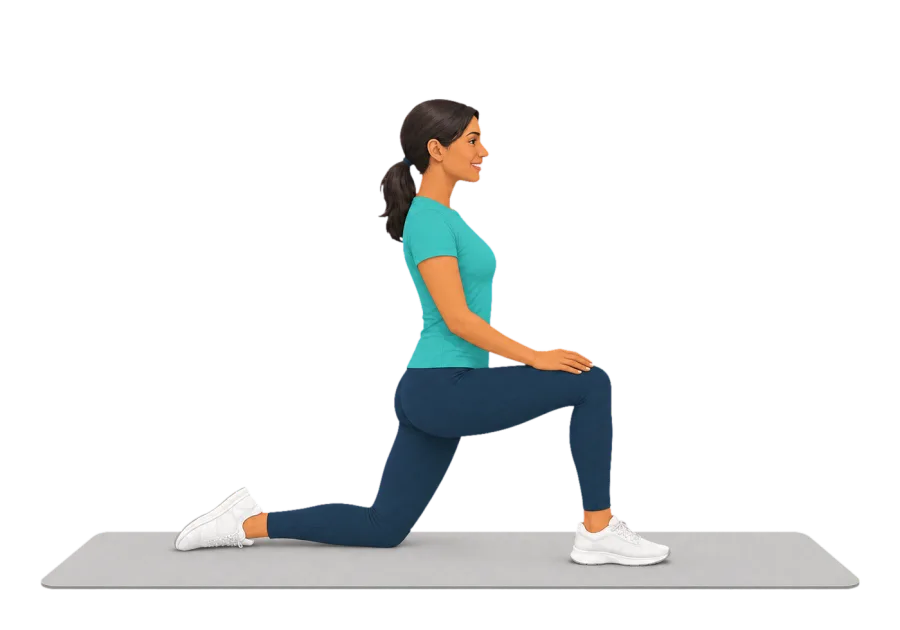
The usual step down is a low lunge with the back knee on the floor and no wall, which keeps the hip position but eases the knee.[6] Moving the back knee away from the corner achieves something similar while keeping the wall. The usual step up is a taller torso with hands off the front knee. Breaking Muscle advises mastering the earlier positions before raising the other leg.[3]
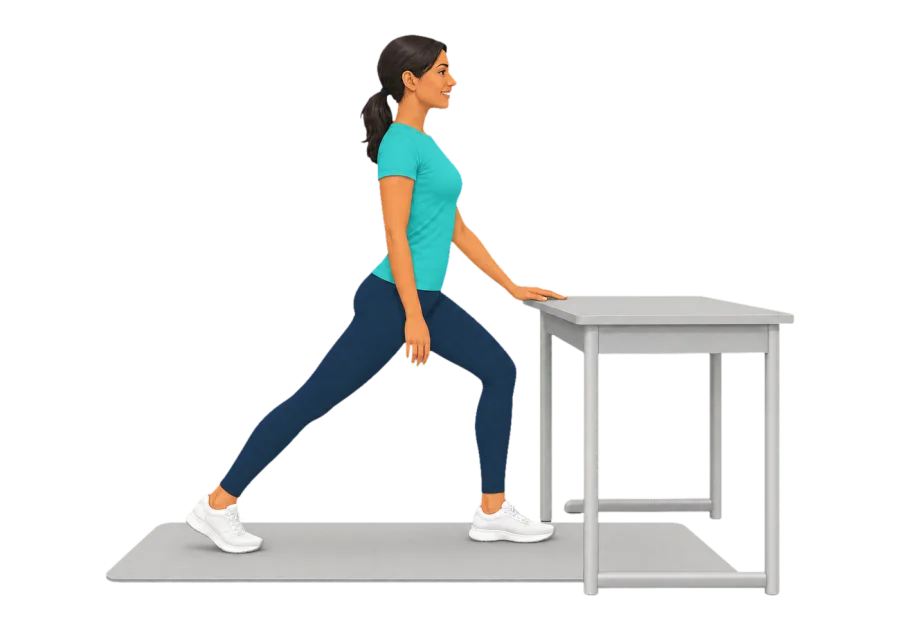
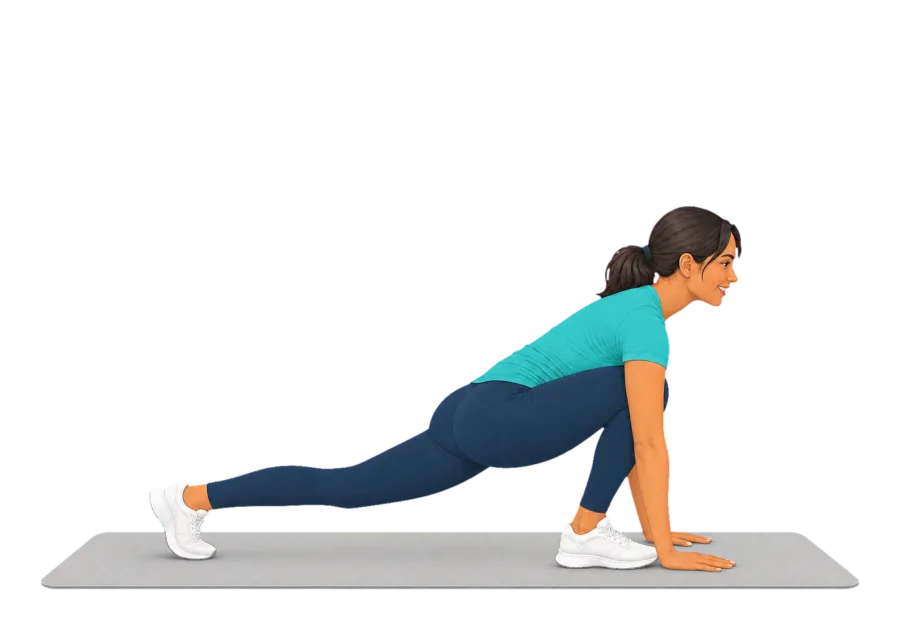
Garage Gym Reviews lists further options, including an added upper-body twist, a side bend and a raised front foot on a box.[6] Related moves include the Low Lunge and Standing Hip Flexor Stretch, which work the same region at lower intensity because the knee stays less bent. The Lizard, a long low lunge, reaches the inner hip and groin as well.
Routines With This Move
- Hips for Sitters
- Lifter's Full Reset
- Race Prep: Run, Sled and Lunge
See Also
Sources
- How One Essential Stretch Can Improve Your Running (opens in a new tab). Outside, adapted from Running That Doesn't Suck by Lisa Jhung, 2019.
- Dr. Kelly Starrett: How to Improve Your Mobility, Posture & Flexibility (opens in a new tab). Huberman Lab, 2024.
- Couch Stretch: Small, But Important Ways You're Doing It Wrong (opens in a new tab). Breaking Muscle, 2021.
- Rectus femoris muscle (opens in a new tab). Wikipedia.
- Kendall Test / Modified Thomas Test | Rectus Femoris Length (opens in a new tab). Physiotutors.
- The Couch Stretch: An Underrated Hip Opener You Can Do Almost Anywhere (opens in a new tab). Garage Gym Reviews, 2024.
- A Quick Video Lesson on the Couch Stretch (opens in a new tab). Whole Life Challenge.
- Ready to Run: Unlocking Your Potential to Run Naturally (opens in a new tab). Victory Belt Publishing, listed by Penguin Books Australia, 2014.
- Becoming a Supple Leopard, 2nd Edition (opens in a new tab). Victory Belt Publishing, listed by Penguin Books Australia, 2015.
- Passive versus active stretching of hip flexor muscles in subjects with limited hip extension: a randomized clinical trial (opens in a new tab). Physical Therapy, 2004.
Further Reading
General information about this move, not medical advice. Stop if something hurts, and read our Safety page before you start. If you have a health condition, ask your doctor or physiotherapist first.