What It Is For
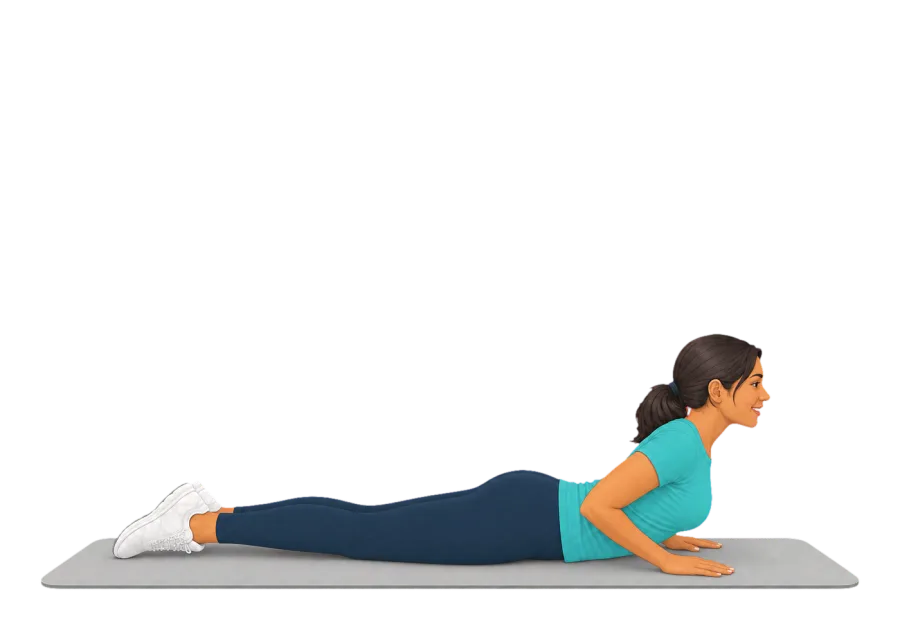
Sphinx places the spine in a gentle, supported extension. With the forearms taking the weight and the elbows under the shoulders, the person can stay for longer than in Cobra, with very little effort. YogaEasy's description says that it stretches the front of the body, including the abdomen and hip flexors.[1]
It is often taught as a preparation for Cobra, or in place of it. Allowing the lower back to soften and breathing low into the belly gives the position a restful character. A pillow under the hips reduces the amount of arch, and this is a common adjustment.[2][3]
How to Do It
A supported backbend, kinder than Cobra because your forearms take the weight. Lie on your front and prop yourself up with your elbows under your shoulders, then let your lower back relax and breathe low into your belly. You should feel a soft stretch through your stomach and a gentle curve in your lower back.
- Forearms down, elbows under shoulders
- Let your lower back relax
- Breathe low into the belly
Arch only a little at first. Stop if it causes sharp pain or pain down a leg.
How It Got Its Name
The English name refers to the sphinx of myth, a creature with a human head and a lion's body.[7] The forearms-forward, chest-lifted shape recalls that image. Who first applied the name to the pose is not documented.
The Sanskrit name given in modern sources, Salamba Bhujangasana, combines salamba, meaning supported, with the word for snake and the word for pose.[2] This is a modern descriptive label and it should not be mistaken for an old one. No early text has been found to use it in the sources reviewed here.
History
No early record of the supported form has been found, and no single inventor is recorded. The parent pose, Bhujangasana, is described in the 17th-century Gheranda Samhita, but the forearm version is not recorded there in the sources reviewed.[3] Sphinx is best described as a twentieth-century teaching variant of an older pose, with its first appearance undocumented.
Its later growth is linked to Yin Yoga, which uses long, relaxed floor holds. Paulie Zink introduced such a series to North America in the late 1970s, and Paul Grilley and Sarah Powers developed it from the 1980s. Yin teachers give some poses new names to show that they should be done differently from their active counterparts, and Seal, a straight-arm relative of Sphinx, is one example.[8]
A separate history runs through physiotherapy. The New Zealand physiotherapist Robin McKenzie reported that in 1956 a patient lying face down with the back extended changed his view of how movement affected back symptoms, and his Mechanical Diagnosis and Therapy method grew from this.[9] Lying face down on the elbows has since become a familiar exercise sheet position. There is no documented link between that clinical tradition and the yoga pose: the two seem to have reached the same shape separately.
Muscles and Tendons
The front of the trunk lengthens as in Cobra, although the stretch is usually less intense. The rectus abdominis is drawn long by spinal extension, and the iliopsoas, the strongest hip flexor, is also lengthened a little because the hips stay straight on the floor.[4][5] The erector spinae are the muscles that can hold the spine in extension, so they may work at first.[6] Once the forearms are supporting the chest, the demand on them is small.
The shoulders are the main working area. Pressing lightly through the forearms stops the chest from sinking between the shoulder blades, and the neck extensors hold up the head. This active shoulder work is a detail of teaching, not something that has been closely measured.
Stretched
- Rectus abdominis
- Lengthens gently as the chest stays lifted
- Obliques
- Mildly lengthened along the sides of the abdomen
- Hip flexors
- A soft stretch at the front of the hips, including iliopsoas
Working
- Erector spinae
- Light work at the start; many teachers then encourage the back to soften
- Serratus anterior and shoulder muscles
- Keep the chest from sinking between the shoulders
- Neck extensors
- Hold the head level
What Research Has Looked At
Specific evidence is limited. A randomised trial at the University of Karachi compared Sphinx with usual care in 100 clinical staff with chronic low back pain. The registry shows that it was completed in 2023, but no results are posted there, so nothing can be concluded from it.[12]
Where It Is Used Today
Sphinx is taught in gentle classes and in Yin Yoga, usually with long, quiet holds.[3] Teachers use a folded blanket under the hips for extra cushioning, and a wall can stand in for the floor.[2]
In clinical settings, the same position appears under plain names. Cambridge University Hospitals lists lying face down leaning on the elbows or forearms as part of a lumbar spine extension exercise, and a Northern Ireland exercise sheet includes resting on the forearms as the start of a back extension.[10][11] These programmes are chosen individually, and the instructions vary.
Variations and Related Moves
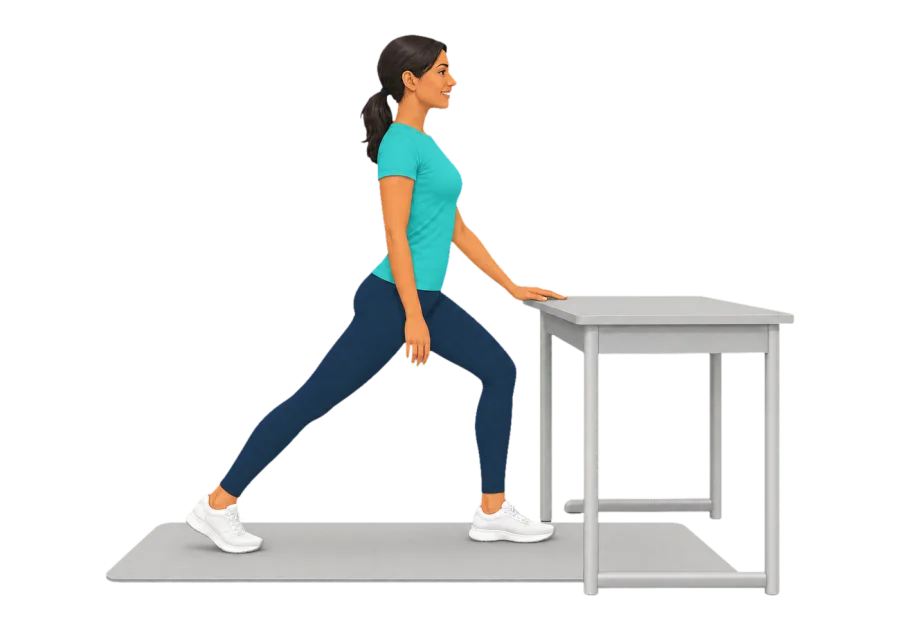
A pillow or folded blanket under the hips reduces the arch, and walking the elbows slightly forward lowers the chest, which makes the shape easier on some backs. In the standing wall version, the forearms rest on a wall and the hips move gently towards it.[2]
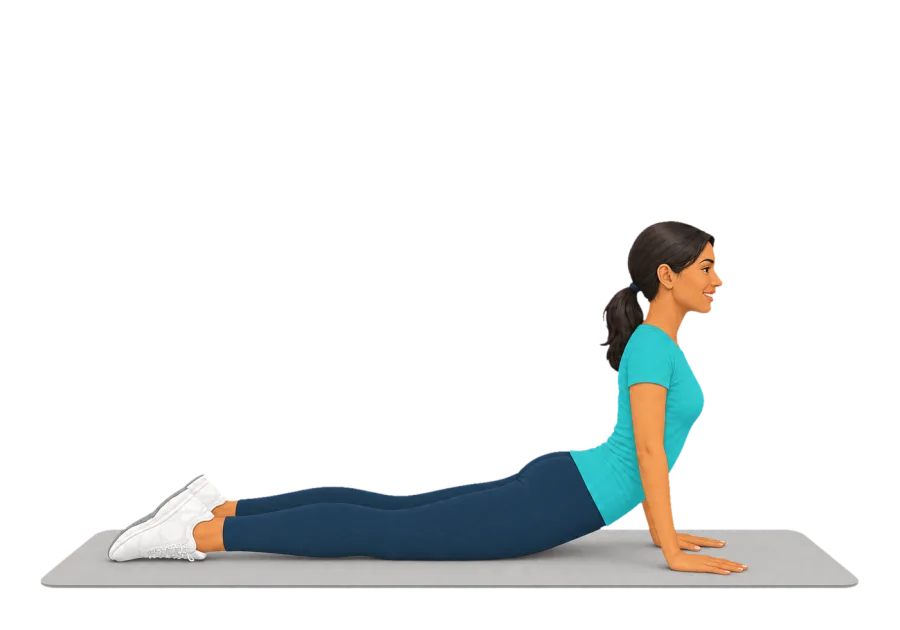
Moving the hands under the shoulders and lifting the chest turns the position into Cobra. Seal, from Yin Yoga, straightens the arms with relaxed legs, and a prone press-up repeats the movement dynamically.[8]
Routines With This Move
- Low Back Ease
- Low Back Long Ease
See Also
Sources
- Sphinx Pose (opens in a new tab). YogaEasy.
- Sphinx Pose (opens in a new tab). Yoga Journal.
- Bhujangasana (opens in a new tab). Wikipedia.
- Rectus abdominis muscle (opens in a new tab). Wikipedia.
- Iliopsoas (opens in a new tab). Wikipedia.
- Erector spinae muscles (opens in a new tab). Wikipedia.
- Sphinx (opens in a new tab). Wikipedia.
- Yin Yoga (opens in a new tab). Wikipedia.
- The McKenzie Method – How it all Began (opens in a new tab). The McKenzie Institute New Zealand.
- Back mobility exercises (opens in a new tab). Cambridge University Hospitals NHS Foundation Trust.
- Lower Back Pain Exercises (opens in a new tab). Education Authority Northern Ireland.
- Effect of Sphinx Pose (Salamba Bhujangasana) Among Health Care Providers With Chronic Low Back Pain (opens in a new tab). ClinicalTrials.gov, 2023.
Further Reading
- Gheranda Samhita (opens in a new tab). Wikipedia.
- Surya Namaskar (opens in a new tab). Wikipedia.
General information about this move, not medical advice. Stop if something hurts, and read our Safety page before you start. If you have a health condition, ask your doctor or physiotherapist first.