What It Is For
Clams is a low-load exercise for the muscles at the side and back of the hip. The person lies on one side with hips and knees bent and heels together, then lifts the top knee away from the bottom one while the heels stay in contact. The pelvis should not roll back, because that lets the trunk provide the movement instead of the hip.
It is widely used to introduce people to hip strengthening, since it needs no equipment, no standing balance and very little load. Physiotherapists often include it in programmes for people with hip, knee or low back complaints. Researchers describe it as a common way of training the hip abductors, and Cleveland Clinic lists a clamshell among exercises for piriformis syndrome.[1][2]
Because the load is small, it serves mainly as a starting point. A band can be added, and people usually move on to standing exercises as they gain strength.
How to Do It
A small move that wakes up the side of your buttock. Lie on your side with your knees bent and heels together, then open the top knee like a clam shell, without letting your hips roll back. You should feel a warm, steady effort at the side of your hip.
- On your side, knees bent
- Heels stay together
- Keep your hips still
How It Got Its Name
The name comes from the action: with the heels as a hinge, the knees open and close like the two halves of a clam shell. Both Clam and Clamshell appear in research papers.[5][6] Who first used the name is not recorded.
History
No inventor or founding text is recorded. The move is a simple hip rotation, and it may have been used in physical therapy or exercise classes long before anyone wrote it up. The earliest study found for this article is from 2009, by which time the hip clam was already described as a common therapeutic exercise, so its origin must be earlier.[7] Popular claims linking it to one tradition, such as Pilates, could not be confirmed.
The research interest grew from about that point. A 2009 paper tested a range of therapeutic exercises for the gluteal muscles, and the clam was one of those that scored below side-lying hip abduction.[7] In 2013 a fine-wire study gave it a new reputation, ranking it first for gluteal activity relative to the tensor fascia lata.[5] Later work has pulled in both directions.
Muscles and Tendons
Clams is a working move. Opening the knee rotates the top hip outwards, with some abduction. The gluteus medius lies on the outer ilium and attaches to the greater trochanter by a flattened tendon. Its back fibres extend and externally rotate the hip, and the muscle as a whole abducts it.[3] That makes it the natural target of the exercise. Upper gluteus maximus and the deep rotators help with the rotation.[4][5]
The tensor fascia lata also abducts the hip, but it rotates the hip inwards, so an exercise based on outward rotation tends to leave it less to do. That logic explains much of the research interest in clams.[5] One study found that the direction in which the greater trochanter moved during the exercise affected which muscles were busiest, so technique matters as well as the shape of the move.[1]
Stretched
- Inner thigh muscles
- Only a slight lengthening as the knee opens; this is not a stretching move
Working
- Gluteus medius
- Main target, especially its back fibres, which turn the hip outwards
- Gluteus maximus
- Upper part assists the outward rotation
- Deep hip rotators
- Piriformis and its neighbours rotate the hip outwards
- Trunk muscles
- Hold the pelvis still so that it does not roll back
Tendons and Fascia
- Gluteus medius tendon
- Flattened tendon attaching to the outer greater trochanter
What Research Has Looked At
The studies disagree, partly because they measure different things. Distefano and colleagues found that side-lying hip abduction produced about 81 per cent of maximal activity in gluteus medius, significantly more than the clam.[7] Moore and colleagues, using fine-wire electrodes in ten healthy young adults, concluded that the side-lying clam did not appear effective at recruiting the segments of gluteus medius.[9]
Studies of selectivity point the other way. Selkowitz and colleagues tested 20 healthy people across 11 exercises and found that the clam had the highest gluteal-to-tensor-fascia-lata index, at 115.[5] A Waterloo study of 13 healthy men found the ratio of gluteus medius to tensor fascia lata far greater for the clam than for hip abduction, and changing the hip flexion angle between 30 and 60 degrees made no significant difference.[6] In 12 people with patellofemoral pain, only the clam with elastic resistance gave significantly more activity in both gluteal muscles than in the tensor fascia lata, with gluteus medius at about 37 per cent of maximum.[8]
Taken together, the clam appears to be a low-intensity exercise that favours the gluteal muscles over the tensor fascia lata, not one that drives them hard. These are measures of muscle activity in small groups, not of outcomes.
Where It Is Used Today
The clam is a fixture of physiotherapy home programmes, hospital patient information and personal training.[2][7] Research on it has included healthy adults and, more recently, people with patellofemoral pain, a sign of the settings in which clinicians apply it.[8]
A McGill laboratory paper from 2014 tested it as part of low back and lower limb rehabilitation, and described improving gluteus medius activity and strength as a common clinical goal.[6] It is also familiar in runners' strength routines and group exercise classes, usually with a light resistance band.
Variations and Related Moves
A smaller range makes it easier and helps to keep the pelvis still. A light band around the thighs adds load.[8] Changing how far the hips are bent is a common variation, though one study found it did not alter the balance between the two muscles.[6]
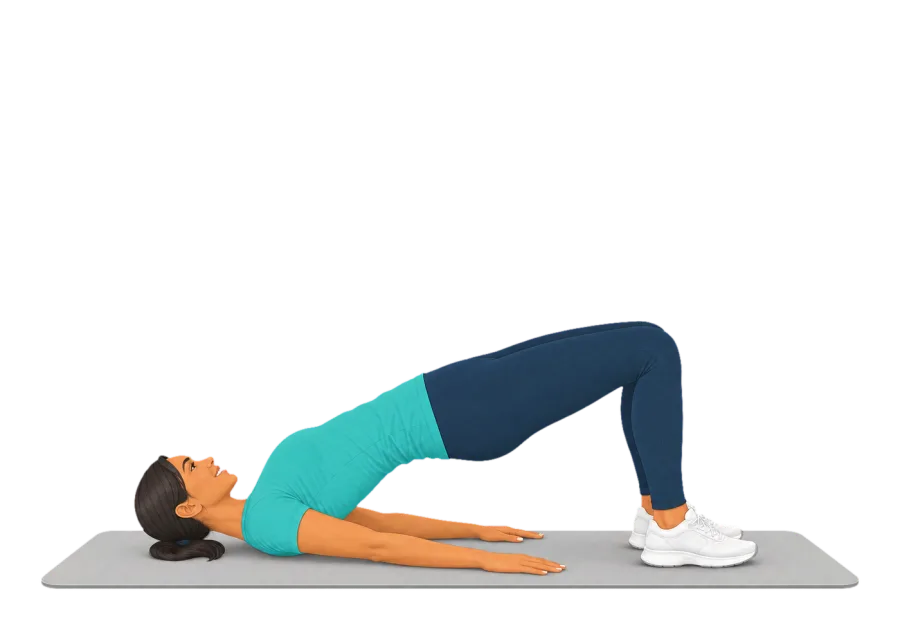
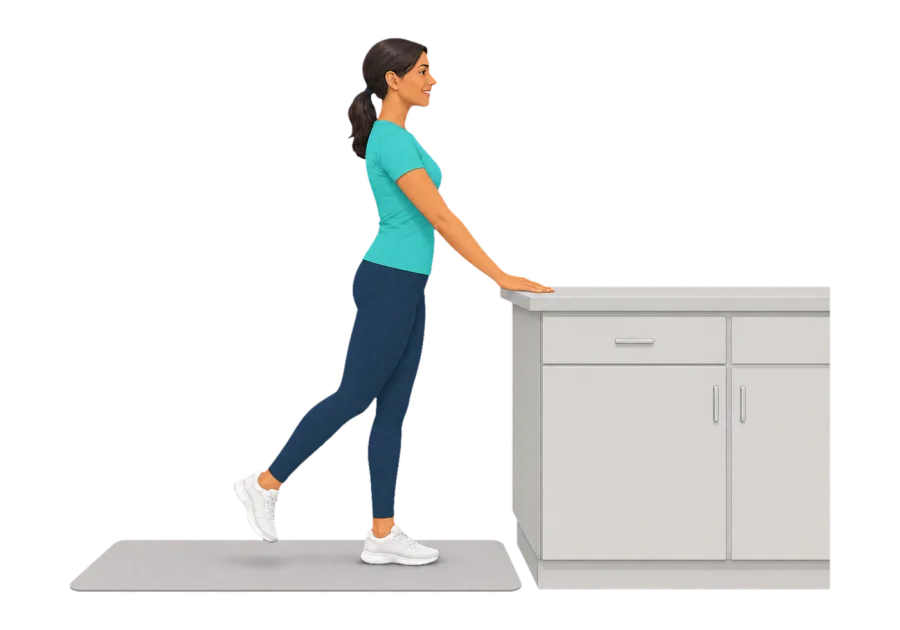
Side-lying hip abduction lifts the whole leg and asks more of gluteus medius.[7] The Bridge and Single Leg Stand work the same muscles with more load, and quadruped hip extension scored well in the same selectivity study.[5]
See Also
Sources
- Examination of hip function and muscle activity during clam exercise (opens in a new tab). Journal of Physical Therapy Science, 2023.
- 7 Best Stretches and Exercises for Piriformis Syndrome (opens in a new tab). Cleveland Clinic, 2022.
- Gluteus medius (opens in a new tab). Wikipedia.
- Piriformis muscle (opens in a new tab). Wikipedia.
- Which exercises target the gluteal muscles while minimizing activation of the tensor fascia lata? Electromyographic assessment using fine-wire electrodes (opens in a new tab). Journal of Orthopaedic & Sports Physical Therapy, 2013.
- Examining the effects of altering hip orientation on gluteus medius and tensor fascae latae interplay during common non-weight-bearing hip rehabilitation exercises (opens in a new tab). Clinical Biomechanics, author's copy at BackFitPro, 2014.
- Gluteal muscle activation during common therapeutic exercises (opens in a new tab). Journal of Orthopaedic & Sports Physical Therapy, 2009.
- Comparison of electromyographic activity of the gluteal muscles and tensor fascia lata in persons with patellofemoral pain: evaluation of selected, hip-targeted exercises using indwelling fine-wire electrodes (opens in a new tab). Physiotherapy Theory and Practice, 2024.
- Rehabilitation Exercises for the Gluteus Medius Muscle Segments: An Electromyography Study (opens in a new tab). Journal of Sport Rehabilitation, 2019.
Further Reading
General information about this move, not medical advice. Stop if something hurts, and read our Safety page before you start. If you have a health condition, ask your doctor or physiotherapist first.