What It Is For
The Cossack Squat combines a one-leg squat with a stretch. From a wide stance, the person sits into one knee while the other leg stays straight, heel on the floor and toes pointing up. Catalyst Athletics, a weightlifting training resource, describes it as a way to improve hip mobility through active, loaded stretching and to build stability in that range, while strengthening the adductors and inner hamstrings.[1]
It is useful because few gym exercises work in the side-to-side plane. Most squats and lunges move forwards and backwards. BarBend recommends it for strength athletes and for sport athletes who change direction sideways, including football, basketball and hockey players.[2]
The exercise is also a test of limits. Breaking Muscle's author Jesse Irizarry, a strength coach, describes it as searching for the edge of mobility and stability, and warns that hips, ankles and knees can be strained if depth is rushed.[3]
How to Do It
A side-to-side squat for the inner thighs, hips and ankles. From a wide stance, shift your weight into one bent knee while the other leg stays straight with its toes up. Keep the bent heel down, and hold a post or counter if you need to. You should feel a stretch along the straight leg's inner thigh and work in the bent leg.
- Wide stance
- Other leg straight, toes up
- Go only as low as is easy
Pad your knees with a folded towel or cushion. Skip it if kneeling hurts.
Stand next to a counter, wall or sturdy chair and hold on whenever you need to.
How It Got Its Name
The name points to the Cossacks, the frontier communities of Ukraine and southern Russia, whose own name comes from a Turkic word for a free man.[6] It evokes the crouching kicks of East Slavic dance, known in Russian as prisiadki, in which a low squatting dancer thrusts one leg out.[7] The resemblance is real, since the extended straight leg echoes the dance.
No source was found that records who first applied the name to the exercise, or when. The association is likely but not proved. The writer Jenn Pilotti states that the modern exercise derives from hopak dancing, while also framing her account as a story, and she gives no source for that link.[8]
History
The dance has a long and contested history of its own. Wikipedia's account of prisiadki points to a mid 14th-century Psalter whose decorated letter shows a travelling minstrel dancing in this crouching style, which, if accurate, would put the movement well before any recorded Cossack dance.[7] The hopak, the dance most often named, is usually described as a Cossack social dance from the 16th century onwards, although that article itself flags its origins section as lacking citations and notes that no Cossack-era dances were recorded.[9]
The strongly Cossack image may be partly a later creation. The scholar Laura J. Olson, as summarised by Wikipedia, argues that the showy Cossack style of performance owes more to 19th-century Russian ballet, and to Soviet troupes, than to Cossack tradition.[7] Olson, a professor of Russian, set out her work on Russian folk revival in Performing Russia in 2004.[10]
Pilotti makes a sensible further point: in the dance, the squat was a passing moment between other steps, not a repeated exercise.[8] Nothing found shows a line of descent from dance floor to gym. Fitness sites sometimes hint at Soviet or kettlebell origins, but no source reviewed connects it to Pavel Tsatsouline or any other named teacher. No inventor of the exercise is recorded, and its first appearance in print is unknown.
Muscles and Tendons
The two legs do opposite jobs. The bent leg performs a very low single-leg squat: BarBend explains that the quadriceps and gluteals power the return from the bottom.[2] This is strength work more than stretching, although the ankle needs generous dorsiflexion to keep the heel flat, and the gluteal muscles reach a lengthened position at the bottom.
The straight leg takes the stretch. Its adductors lengthen along the inner thigh and also work against the load, so they are trained eccentrically and not merely stretched.[2] The adductor magnus has parts that act like adductors and parts that act like hamstrings, which is one reason the stretch can run down the inner back of the thigh.[4] Turning the foot outward shifts more of the sensation to the hamstrings.[2] The gracilis, which crosses the knee, also comes under tension because this knee stays straight.[5]
Staying balanced brings in the gluteus medius, deep hip muscles and the trunk. Irizarry notes that the trunk works harder to hold posture as loads are added.[3]
Stretched
- Adductors of the straight leg
- Lengthened under load as the body moves away from that leg
- Hamstrings of the straight leg
- Stretched, more so with the foot turned out
- Gluteus maximus of the bent leg
- Lengthened at the bottom as the hip flexes strongly
- Soleus of the bent leg
- Lengthened with the heel down and the knee bent
Working
- Quadriceps of the bent leg
- Control the descent and straighten the knee
- Gluteus maximus of the bent leg
- Extends the hip on the way up
- Gluteus medius and trunk muscles
- Hold the body steady from side to side
- Adductors
- Work while lengthening, so they are loaded as well as stretched
Tendons and Fascia
- Achilles tendon
- Takes tension on the bent side as the heel stays down
- Patellar tendon
- Loaded on the bent side, transferring quadriceps force to the shin
Where It Is Used Today
Today the Cossack Squat belongs to strength gyms. Catalyst Athletics lists it in its Olympic weightlifting exercise library for use as a training exercise or a warm-up, with a barbell, a kettlebell, dumbbells or an overhead weight as options.[1] BarBend's author, a certified strength coach, offers it to the general public as well as to athletes.[2]
No peer-reviewed study focused on this exercise was found. Claims that it reduces groin injury in sport, which appear on some fitness sites, could not be supported and are not repeated here.
Variations and Related Moves
Beginners can hold a post, counter or suspension straps, or stand on a raised platform to shorten the range. BarBend also lists a landmine version and a simpler, shallower lateral squat.[2] A pause at the bottom makes it harder, as the app suggests. Stance varies by school: Catalyst teaches a toes-out stance in which the straight leg's foot may roll back onto the heel, while Irizarry keeps the toes pointing straight as a harder test of mobility.[1][3]
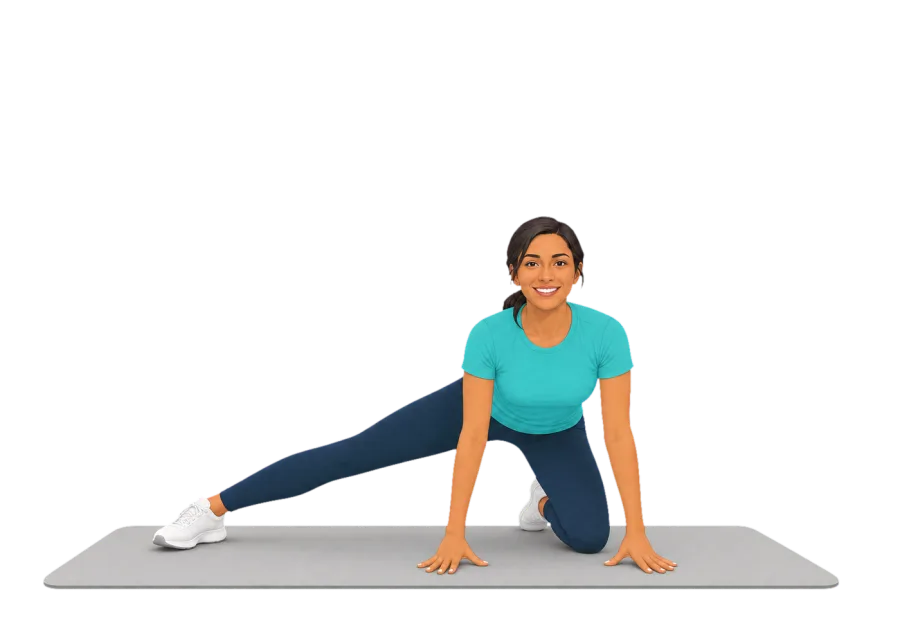
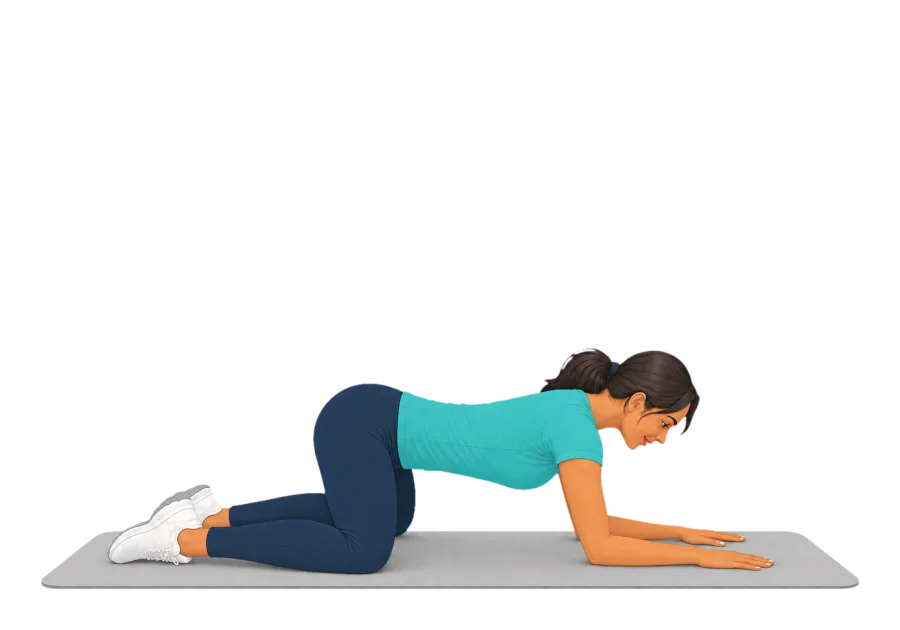
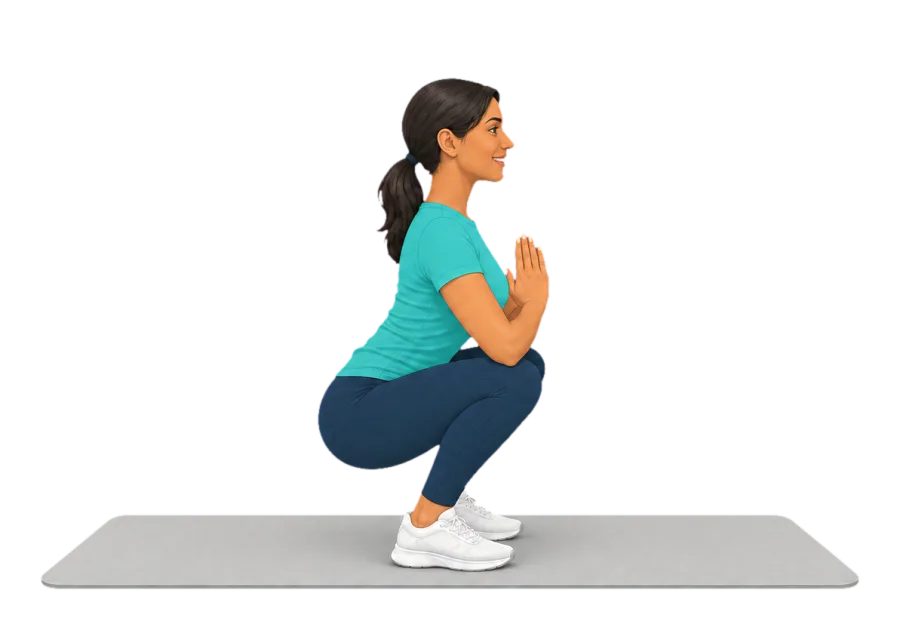
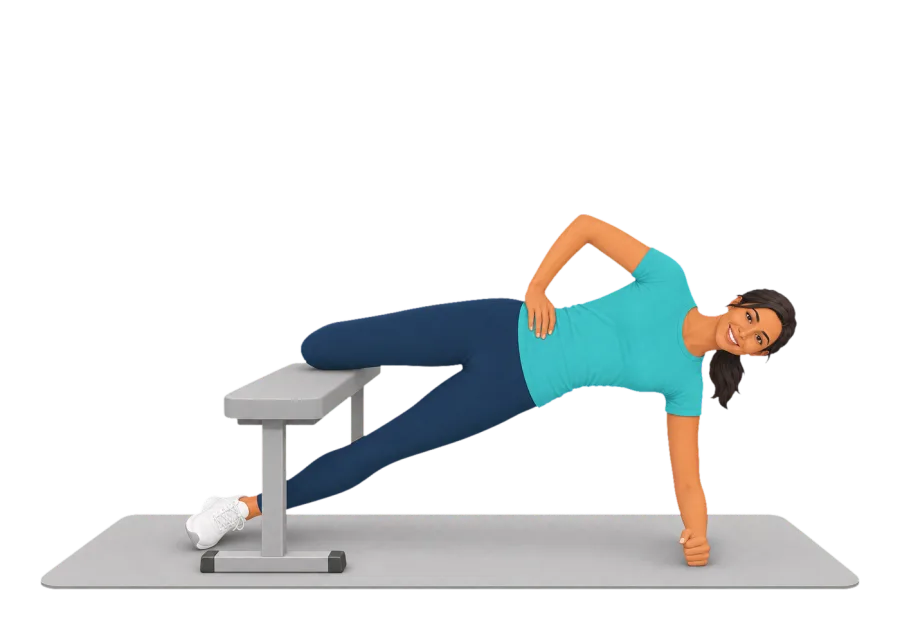
A common progression, the low switch, stays down and passes from side to side without standing.[1][2] Heavier options include the back rack version, and overhead loading adds shoulder demand. Related moves include the Adductor Rock and Frog, which stretch the same muscles without standing, the Deep Squat Hold, and the Copenhagen, which strengthens the adductors more directly.
Routines With This Move
- Race Prep: Run, Sled and Lunge
- Squat Depth
See Also
Sources
- Cossack Squat (opens in a new tab). Catalyst Athletics.
- How to Do the Cossack Squat: a Challenging But Rewarding Exercise (opens in a new tab). BarBend, 2024.
- The Cossack Squat: Reclaiming Your Baseline Balance (opens in a new tab). Breaking Muscle, 2022.
- Adductor magnus muscle (opens in a new tab). Wikipedia.
- Gracilis muscle (opens in a new tab). Wikipedia.
- Cossacks (opens in a new tab). Wikipedia.
- Prisiadki (opens in a new tab). Wikipedia.
- Cossack squats, an origin story (opens in a new tab). Body, Mind, Movement (Jenn Pilotti), 2023.
- Hopak (opens in a new tab). Wikipedia.
- Laura Olson Osterman (opens in a new tab). Wikipedia.
Further Reading
General information about this move, not medical advice. Stop if something hurts, and read our Safety page before you start. If you have a health condition, ask your doctor or physiotherapist first.