What It Is For
The World's Greatest Stretch prepares several regions at once. From a long lunge, the person places both hands on the floor, lowers the inside elbow towards the front instep, then turns the chest and reaches that arm to the ceiling. An answer published by Outside in 2009, from a specialist at Athletes' Performance, described it as useful for people who sit for long periods, working the body from hips to shoulders and challenging balance.[1]
Its main use is as a warm-up. Sweat presents it as a moving warm-up that can also be held after training or used as a standalone mobility exercise.[2] The physical therapist Sasha Cyrelson told Refinery29 that it is a dynamic stretch which resembles workout movements and acts on the trunk, hip flexors and hamstrings.[3]
The attraction for coaches is economy. Equinox's 2013 feature lists more than a dozen targets, from the hip rotators to the lats and calves.[4] The list is generous, since several of those muscles are only lightly involved, but it explains why a coach with limited warm-up time reaches for it.
How to Do It
One move that covers the hips, hamstrings and upper back, ideal before training. Step into a long lunge, place both hands on the floor and drop your inside elbow towards your front instep. Then rotate and reach that arm to the ceiling, following it with your eyes. You should feel the front hip opening and your upper back turning.
- Step into a long lunge
- Keep your back leg long
- Stay inside an easy range
Spread your fingers and keep weight even. Use fists or forearms if your wrists complain.
How It Got Its Name
The name is a boast, and it stuck. The move also has a purely descriptive name. Outside's 2009 piece gave it as the Forward Lunge Elbow-to-Instep Stretch and offered The World's Greatest Stretch as the popular alternative.[1] The blogger Roy Pumphrey, writing in 2018, recalled first hearing the grand name in Core Performance, and he introduced the move under the plainer label of groiners with rotation.[5] Refinery29 simply noted that it really is called that, with the initials WGS.[3] No source identifies who coined the phrase.
History
No inventor is recorded. Lunges with a twist are simple enough to have appeared in many gyms, and the components are older than the name. The name itself is tied to one institution. Mark Verstegen founded Athletes' Performance in Tempe, Arizona in 1999, and the company, now Exos, went on to prepare NFL Combine prospects from 2001.[7]
Verstegen's Core Performance reached a wide public in the middle of that decade. Wikipedia's entries give its date as 2004 and 2005.[7][8] Pumphrey's recollection links the name to that book, but he hedges it as something he is fairly sure of.[5] A copy of the book was not checked for this article, so the connection is best read as one writer's memory, not a confirmed first use. The claim that Verstegen himself named the move appears on fitness sites without a primary source and is not repeated here as fact.
The firmest dated link found is the 2009 Outside answer, in which an Athletes' Performance specialist, Nick Anthony, recommends it under this name.[1] By 2013 Equinox could describe it as a familiar stretch among trainers and athletes.[4] Exos's work with the German national football team from before the 2006 World Cup, and with the United States military from 2006, gave its methods a wide reach, though no source reviewed ties this drill to those programmes specifically.[7]
Muscles and Tendons
Each leg does a different job. In the back leg, the hip extends, placing the iliopsoas and rectus femoris under tension, and the long leg with lifted heel adds tension through the calf.[4] In the front leg, the hip flexes strongly, so the gluteal muscles lengthen. As the elbow moves inside the knee, the front hip also abducts and turns out a little, which brings in the adductors. Roy Pumphrey's alternative name for the drill, groiners, points to that part of the move.[5]
The upper body supplies the second half. The rotation should come mainly from the thoracic spine, the region of the ribcage, which is built for more rotation than the lumbar spine. The obliques and muscles between the ribs and spine turn the trunk, while the shoulder of the supporting arm holds the floor. The reaching side's chest muscle opens, and the eyes following the hand encourage the neck to join the turn.
The hamstrings are often listed as a main target, but in the app's basic form the front knee stays bent, so their stretch is modest.[6] They take a more direct stretch in the rock-back option, when the hips move back and the front leg straightens. Much of the rest of the effort is strength and balance, not stretch.
Stretched
- Iliopsoas and rectus femoris
- Back leg, as the hip extends in the long lunge
- Gluteus maximus
- Front leg, as the hip flexes under the chest
- Hip adductors
- Front leg, as the elbow drops inside the knee and instep
- Calf muscles
- Back leg, with the heel lifted and leg long
- Hamstrings
- Mainly in the rock-back option, when the front knee straightens
- Pectoralis major and trunk rotators
- Opened on the reaching side during rotation
Working
- Front-leg quadriceps and gluteals
- Support the lunge
- Back-leg gluteals
- Help keep the back leg long
- Obliques and thoracic rotators
- Turn the ribcage
- Shoulder stabilisers
- Hold the supporting arm and control the reaching arm
Tendons and Fascia
- Achilles tendon
- Takes tension in the back leg, with the calf muscles
Where It Is Used Today
It is now a fixture of gym warm-ups, and is found in commercial fitness programmes such as those from Sweat and BODi.[2][6] The Sweat trainer Katie Martin uses it in her running warm-ups.[2] Physical therapists also teach it: Cyrelson's comments in Refinery29 come from a clinical director at a therapy practice.[3]
The reader who prompted the Outside answer wrote from Mosul in Iraq, which gives a small glimpse of how far the move had spread by 2009.[1] No peer-reviewed study testing this exact drill was found, so its reputation rests on coaching practice. Research on dynamic warm-ups in general should not be read as evidence for this one move.
Variations and Related Moves
Resting the back knee on the floor is the standard easier version, and shortening the lunge or the rotation also lowers the demand. BODi suggests yoga blocks or a chair for support, and a hand on the hip instead of the overhead reach.[6] The usual harder version adds the hamstring rock-back after each rotation. Some coaches also hold the position for 20 to 30 seconds as a cool-down.[2]
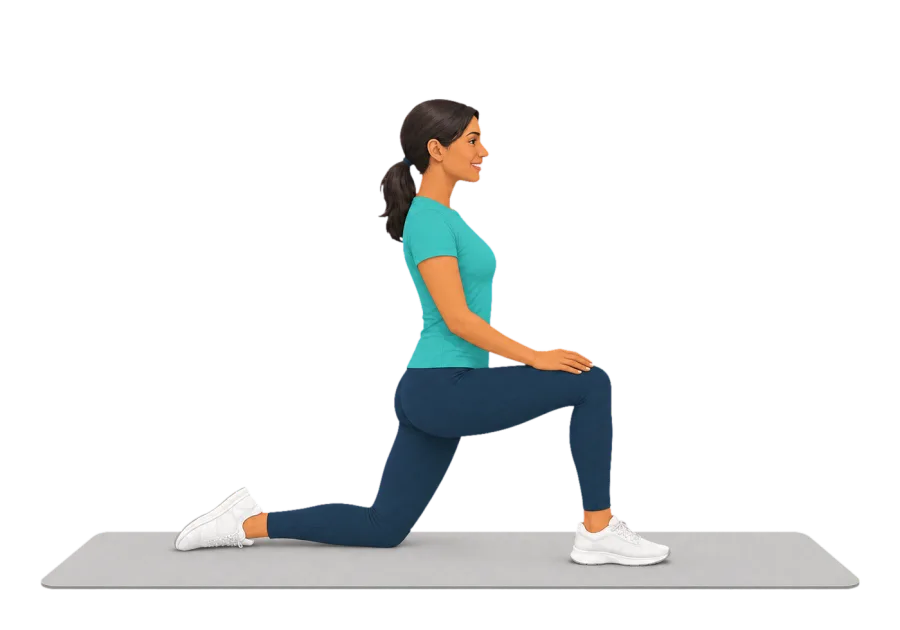
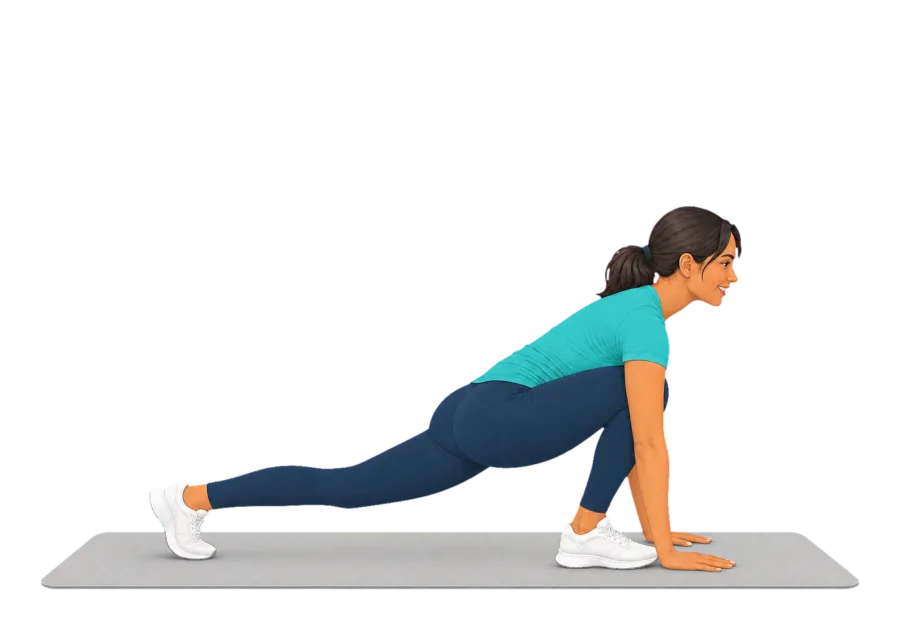
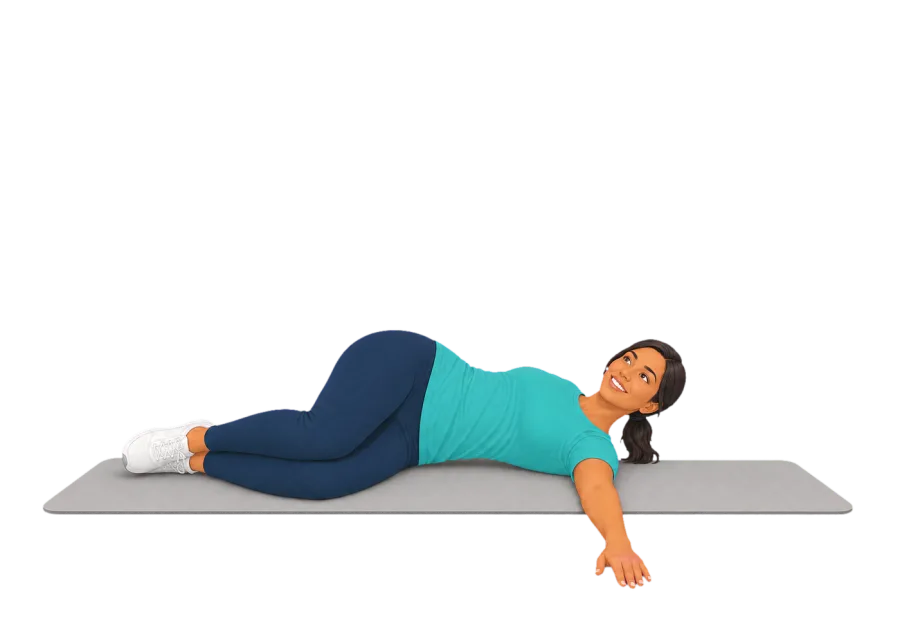
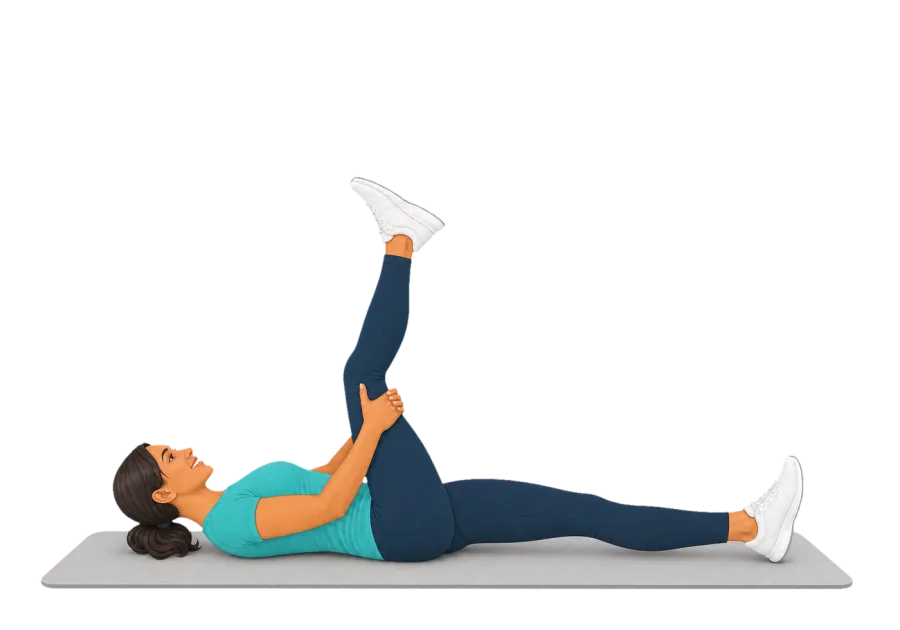
Related moves include the Low Lunge and Lizard, which share the lunge shape without the rotation, and the Open Book, which isolates the upper-back turn while lying on the side. Hamstring Floss is a gentler moving stretch for the back of the leg.
Routines With This Move
- Before the Run
- Fifteen Minute Reset
- Morning Wake Up
- Race Prep: Run, Sled and Lunge
- Ten Minute Reset
See Also
Sources
- What's the world's best stretch? (opens in a new tab). Outside, 2009.
- Why We Love The World's Greatest Stretch So Much (opens in a new tab). Sweat, 2024.
- The World's Greatest Stretch Is A Real Thing, Here's How To Do It (opens in a new tab). Refinery29, 2018.
- The world's greatest stretch (opens in a new tab). Equinox, 2013.
- You Should Do This: 'The Worlds Greatest Stretch' AKA Groiners W/ Rotation (opens in a new tab). Roy Pumphrey, 2018.
- Learn How to Do the World's Greatest Stretch (opens in a new tab). BODi Blog, 2024.
- EXOS (opens in a new tab). Wikipedia.
- Mark Verstegen (opens in a new tab). Wikipedia.
Further Reading
General information about this move, not medical advice. Stop if something hurts, and read our Safety page before you start. If you have a health condition, ask your doctor or physiotherapist first.