What It Is For
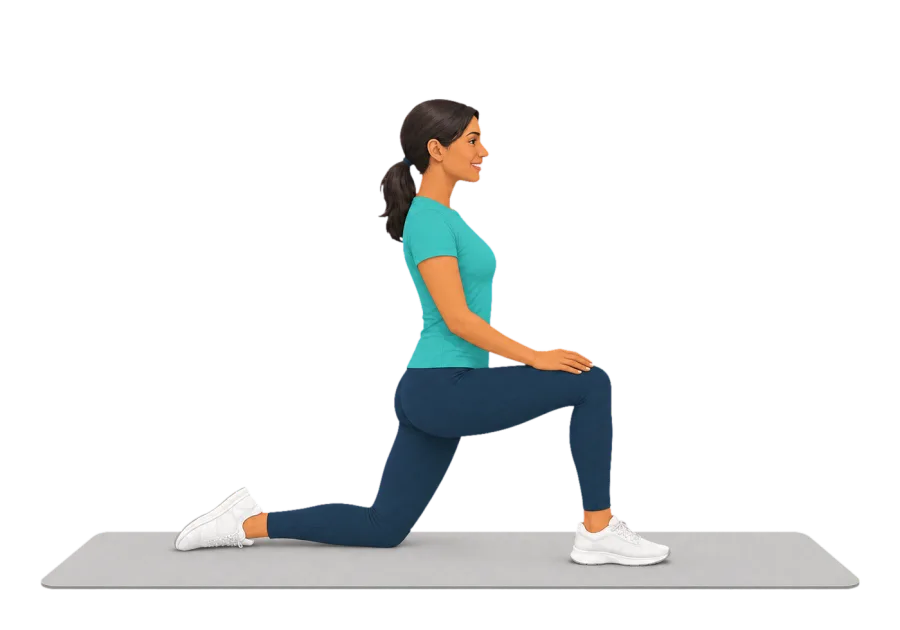
Lizard stretches two regions at once: the front of the back leg's hip and the inner side of the front leg's hip. It begins as a lunge. The front foot then moves outside the hand, the back leg extends and the hips sink slowly, with the hands taking a good part of the weight. Brett Larkin's guide lists the hamstrings, hip flexors and quadriceps as the stretched areas.[1] YogaUOnline, which publishes teacher education, highlights the hip flexors, including the psoas.[2]
It suits people who want more than a plain lunge offers. Wide foot placement turns the front hip outwards, which adds the inner thigh and groin to the stretch. It is usually kept for later in a session, once the hips are warm. Taller or stiffer people often need to stay on the hands or use blocks.
How to Do It
A long, low lunge that reaches the inner hip and groin as well as the front of the hip. From a lunge, place your front foot outside your hand, keep your back leg long and let your hips sink slowly. You should feel a broad stretch around both hips, with your weight well supported by your hands.
- Front foot outside your hand
- Back leg long
- Sink the hips low and slow
Go gently if you have had a hip replacement, and check with your surgeon or physio first.
Spread your fingers and keep weight even. Use fists or forearms if your wrists complain.
How It Got Its Name
The English name has no documented source. Lizard may refer to the low, spread shape of the body, but this is a guess, and no reliable account has been found. The Sanskrit name in modern use is Utthan Pristhasana, also spelled Utthana Pristhasana.[6][2] The sources reviewed here do not give a dependable account of why that name was chosen, and it does not name a lizard, so it should not be taken as a translation of the English name.
History
No single inventor is recorded, and no early text has been identified. The pose does not appear in the lists of pre-modern sources reviewed here. It is best regarded as a recent addition to yoga teaching.
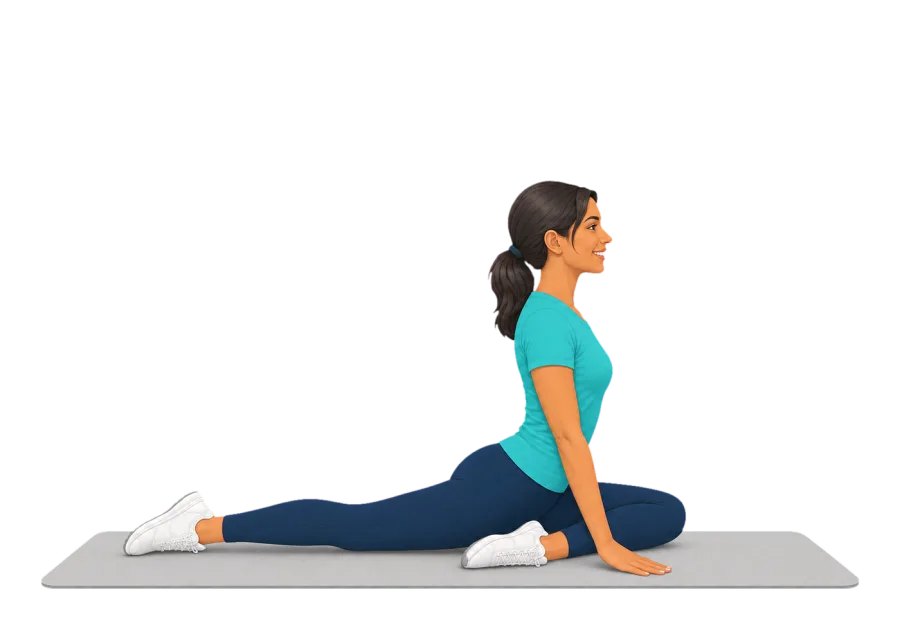
It sits within the family of the modern yoga lunge. Anjaneyasana itself is a twentieth-century pose, and Wikipedia lists Utthana Pristhasana as a variation of it, with the forearms on the floor, citing a Yoga Journal sequence from 2016.[6] That date shows that the name was established by then. It does not show when the pose began. The YogaEasy description of a very similar Yin shape, Dragon, gives a family of related forms.[7] One list of asanas gives Dragon as an English name for Anjaneyasana.[8] Yin Yoga, which reached North America in the late 1970s and developed through the 1980s, uses its own names for many poses.[9] Whether Dragon and Lizard share a source is not documented.
Muscles and Tendons
On the back leg, the mechanics match the Low Lunge. The iliopsoas, the strongest hip flexor, runs from the spine and inner pelvis to the femur, and it lengthens as the thigh moves behind the trunk.[3] The rectus femoris, which crosses the hip and knee, lengthens with it.[4]
On the front leg, the hip is deeply flexed and the knee moves away from the midline. The adductors arise from the pubis and attach down the inner femur, so moving the thigh outwards lengthens them.[5] A forward lean also brings in the hamstrings of the front leg. If the back leg is held long, the quadriceps and gluteals work to keep the knee off the floor, which makes the pose more active. With the back knee down, it is more passive. Bracing through the hands keeps the load off the groin at the end of its range.
Stretched
- Iliopsoas
- Back leg: lengthens with the hip in extension
- Rectus femoris
- Back leg: lengthens across the front of the hip
- Adductors
- Front leg: inner thigh lengthens as the knee moves away from the midline
- Hamstrings
- Lengthen at the hip of the front leg as the trunk folds forward
Working
- Quadriceps
- Back leg: keep the knee straight when it is lifted
- Gluteals
- Steady both hips
- Arm and shoulder muscles
- Share the body's weight through the hands or forearms
Where It Is Used Today
Lizard appears in vinyasa and Hatha classes as a strong hip stretch, and Yoga With Adriene, a popular online teacher, offers it to mixed-level audiences.[10] YogaUOnline has promoted a version with props under the knee and hands so that more students can use it.[2]
Yin classes teach Dragon and its relatives with long holds and relaxed muscles.[7] Coaches working with runners and field sport athletes use similar long-lunge positions in hip mobility warm-ups, although mostly without the yoga name.
Variations and Related Moves
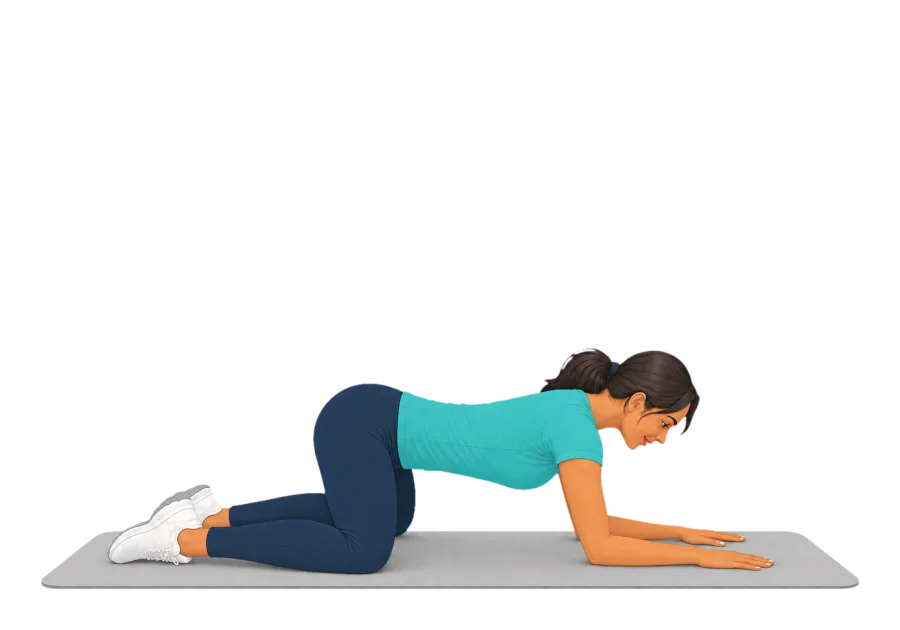
The simplest change is to lower the back knee and pad it. Brett Larkin's guide also lists resting the forearms on blocks, staying on the hands, or going back to a plain Low Lunge.[1] Lowering on to the forearms increases the stretch.
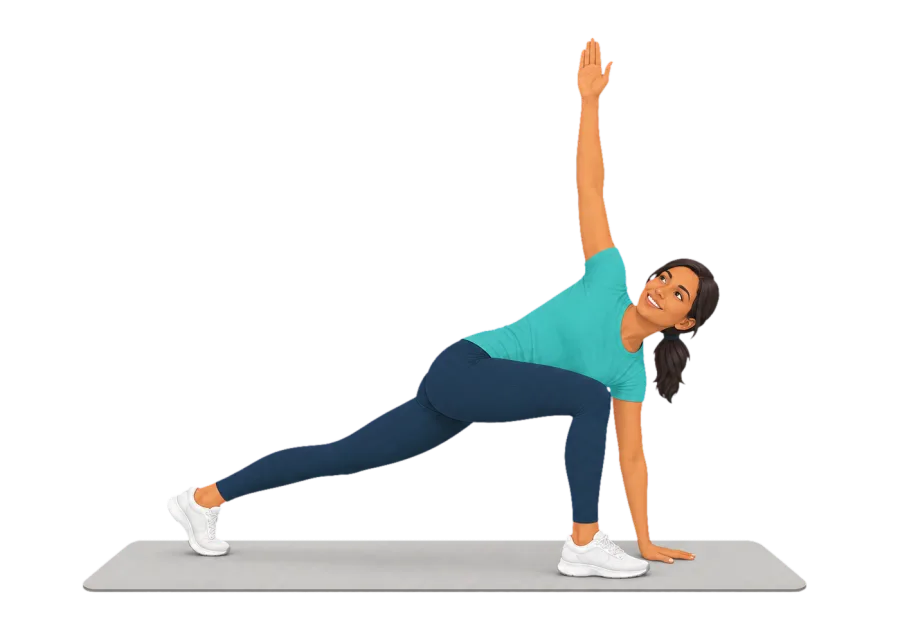
The YogaUOnline article describes a twist that raises one arm, and an advanced form that reaches back for the rear foot. It also mentions Flying Splits as a further step.[2] Yin's Dragon family includes flying high, flying low, twisted and winged forms.[7]
Routines With This Move
- Hips All Round
- Hips for Sitters
See Also
Sources
- How To Do Lizard Pose (Utthan Pristhasana): Techniques, Benefits, Variations (opens in a new tab). Brett Larkin Yoga.
- Lizard Pose: The Many Benefits of Teaching a Radically Accessible Variation (opens in a new tab). YogaUOnline.
- Iliopsoas (opens in a new tab). Wikipedia.
- Rectus femoris muscle (opens in a new tab). Wikipedia.
- Adductor longus muscle (opens in a new tab). Wikipedia.
- Anjaneyasana (opens in a new tab). Wikipedia.
- Dragon pose (opens in a new tab). YogaEasy.
- List of asanas (opens in a new tab). Wikipedia.
- Yin Yoga (opens in a new tab). Wikipedia.
- Lizard Pose – Utthan Pristhasana (opens in a new tab). Yoga With Adriene.
Further Reading
- Lunge (exercise) (opens in a new tab). Wikipedia.
- Split (gymnastics) (opens in a new tab). Wikipedia.
General information about this move, not medical advice. Stop if something hurts, and read our Safety page before you start. If you have a health condition, ask your doctor or physiotherapist first.