What It Is For
The Pancake trains forward tilt of the pelvis with the legs wide apart. The person sits with the legs in a straddle and toes pointing up, then folds forward from the hips and walks the hands out. Motra lists the hamstrings and adductors as its main targets.[1] The aim is a long lower back, not a rounded one, and the chest lowering towards the floor is the result of hip movement.
In gymnastics it serves a practical purpose, since compressed straddle positions are the base of skills such as the stalder. A 2011 American Gymnast article uses the phrase pancake position for the compressed straddle in a stalder, a bar skill.[2] For most adults the use is more modest: it is a measurable, patient way to work on inner thigh and hamstring flexibility.
How to Do It
An athletic stretch for the inner thighs and hamstrings. Sit with your legs wide and toes pointing up, then tilt forward from your hips, walking your hands out in front of you. Keep your lower back long instead of rounding from the top. You should feel it down the insides of both legs. A cushion under your hips makes it far easier.
- Legs wide, toes up
- Tilt from the hips, not the upper back
- Walk your hands forward
Round your back gently and only as far as is comfortable. Ease off if pain travels down a leg.
How It Got Its Name
The name appears to be a visual joke: the body flattened on the floor like a pancake. No source was found that documents this or a first use. The American Gymnast's 2011 article shows the word in established use among gymnastics coaches, applied there to a compressed straddle on the bar and not to a floor stretch.[2] Physitrack now uses Pancake Splits as an exercise name in clinical software.[7]
The yoga name is better understood. Upavistha Konasana combines upavistha, seated, kona, angle, and asana, pose.[3] Motra also lists Tortoise Pose as another name for the stretch.[1] That is doubtful, since yoga's Tortoise Pose, Kurmasana, is usually a distinct pose.
History
Sitting with wide legs and folding forward is not a recent discovery, but the documented record is short. In yoga, Wikipedia's account of the seated forward bends states that Upavistha Konasana is not found in medieval hatha yoga texts, and that it is described in B. K. S. Iyengar's Light on Yoga.[8] That book, first published in English in 1966, set out more than 200 poses with about 600 photographs.[9] The claim of a very old yoga lineage for this shape is therefore unsupported.
There is an earlier trace. Swami Vishnudevananda's 1960 Complete Illustrated Book of Yoga described the same shape under another name, Hastapadasana, a name more usually given to a standing forward bend.[8] The Wikipedia article takes this as a hint of an older origin, but the wording is cautious and no earlier text has been identified. No source reviewed says whether gymnastics or yoga used the shape first.
On the gymnastics side, no history of the stretch was found, and the date when coaches began to call the floor position a pancake is unknown. The 2011 article is the earliest dated use found in this research, and is certainly not the first.[2]
Muscles and Tendons
The position loads two groups together. The adductors, which run from the pelvis down the inner thigh, come under tension because the thighs are held wide. Inside Yoga lists all five of the usual adductors in its account of the same pose: adductor brevis, longus, magnus, pectineus and gracilis.[3] With a straight knee the gracilis is included, since it crosses the knee, which is one difference from the Frog.
The hamstrings, which arise from the ischial tuberosity or sitting bone and cross hip and knee, tension as the pelvis tilts forward over straight legs.[4] The adductor magnus sits between the two groups. Its ischiocondylar part arises beside the hamstrings and is often grouped with them.[5] This explains why the stretch may be felt along the inner back of the thigh.
The usual limit is the pelvis. Yoga Journal explains that short hamstrings draw the back of the pelvis down into a backward tilt, and that sitting on a folded blanket eases this and lets the spine lengthen.[6] This is the reasoning behind the cushion. Once the pelvis is free to tip, the hip flexors can help draw the body forward, and the quadriceps keep the knees straight. Rounding from the upper back gives a sense of moving forward but leaves the target muscles largely unchanged. The same Yoga Journal page warns against rounding the lower back.
Stretched
- Adductor longus, brevis and pectineus
- High on the inner thigh, tensioned by the wide legs
- Gracilis
- Long inner thigh muscle, tensioned because the knee is straight
- Adductor magnus
- Its hamstring portion responds to the forward tilt as well as the wide stance
- Hamstrings
- Lengthened at the hip with the knee straight, nearer their inner side
- Calf muscles
- A mild effect, greater with toes drawn back
Working
- Iliopsoas
- Helps draw the torso forward and tilt the pelvis
- Quadriceps
- Keep the knees straight and kneecaps facing up
- Spinal extensors
- Keep the lower back long
Tendons and Fascia
- Proximal hamstring tendons
- Attach at the sitting bones, where the stretch is often felt
- Adductor tendons
- Attach near the pubic bone, where a stretch high in the groin is felt
Where It Is Used Today
The Pancake is taught in gymnastics and, under its Sanskrit name, in yoga classes.[2][3] It also appears in exercise software: Motra carries an entry for it, and Physitrack offers it for clinicians to assign.[1][7]
Some athletes hold a light weight, as in the harder option taught here. No peer-reviewed study of the Pancake itself was found.
Variations and Related Moves
The main way to make it easier is to sit on a cushion or block, or to bend the knees a little, which reduces hamstring tension and allows the pelvis to tip.[6] Yoga teachers also use blankets under the hips for the same reason. The harder version holds a light weight at the chest. Physitrack's version adds an overhead reach to one side, which brings in the side of the trunk.[7]
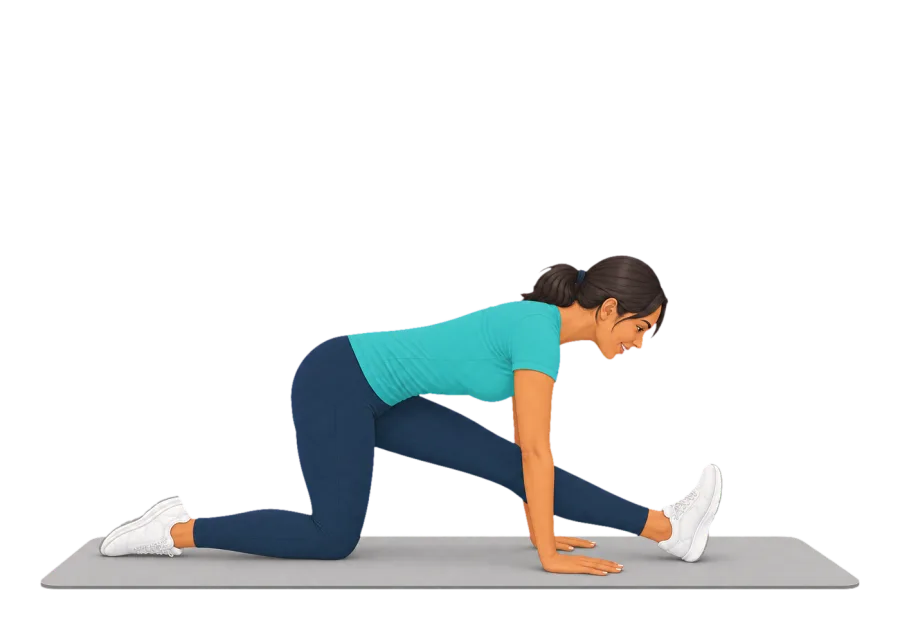
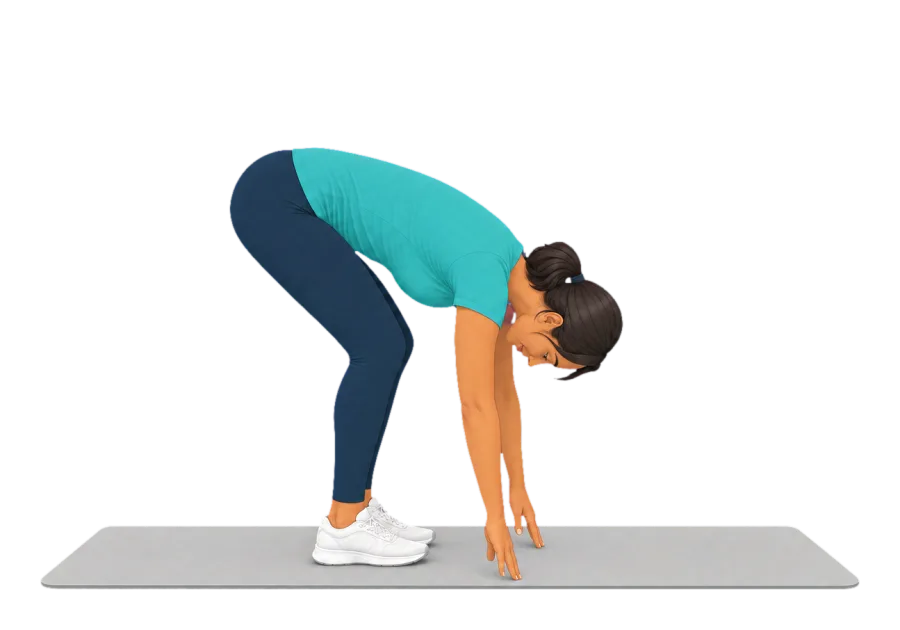
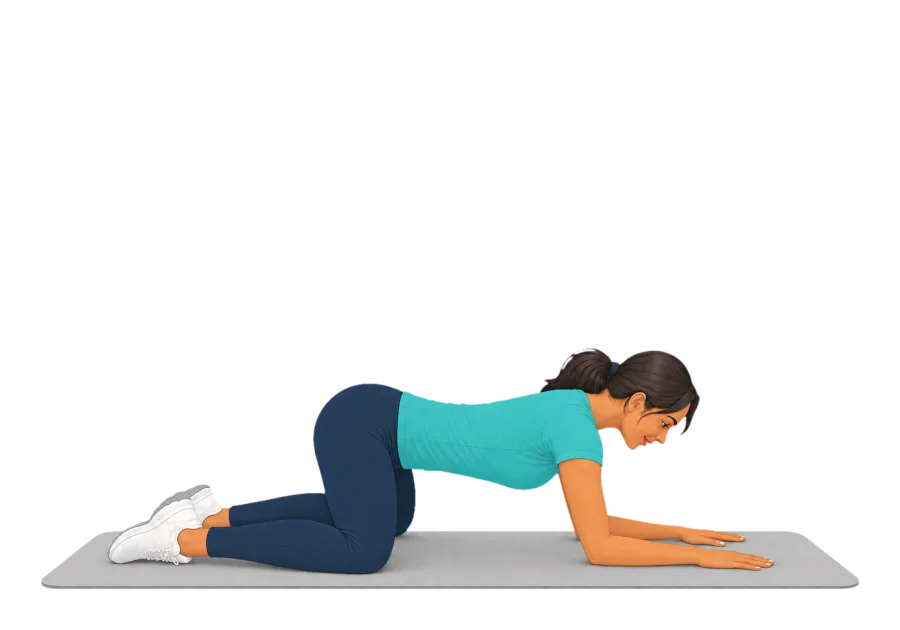
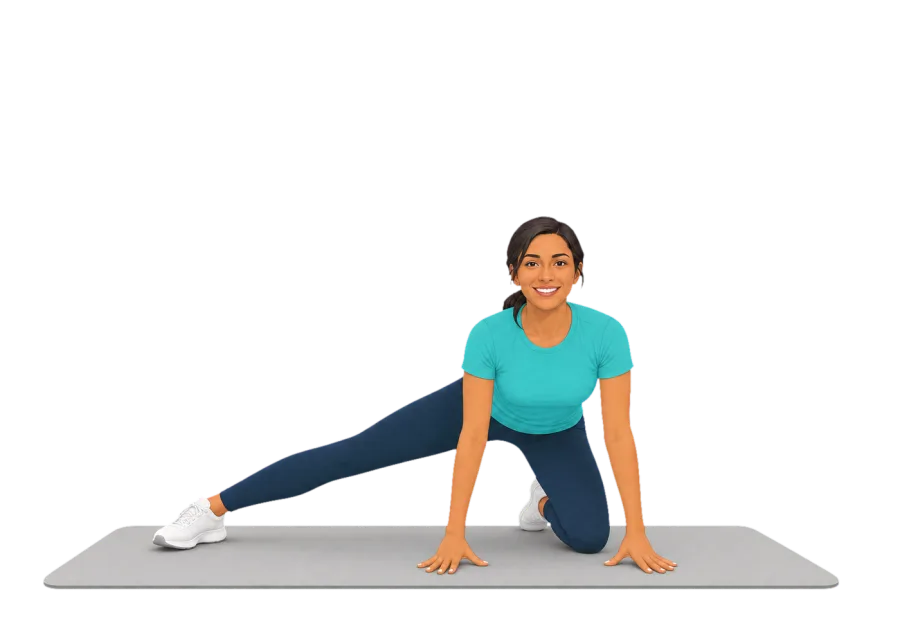
Related moves include the Half Split, a one-leg hamstring stretch with a similar pelvis action, the Standing Forward Fold, and the Frog, which keeps the adductor stretch with bent knees. The Adductor Rock trains the same inner thigh tissues in a kneeling position.
See Also
Sources
- Pancake Stretch (opens in a new tab). Motra.
- Straps Stalder Drill (opens in a new tab). American Gymnast, 2011.
- Upavistha Konasana (Wide-Angle Seated Forward Fold): How To, Alignment & Benefits (opens in a new tab). Inside Yoga.
- Hamstring (opens in a new tab). Wikipedia.
- Adductor magnus muscle (opens in a new tab). Wikipedia.
- Wide-Angled Seated Forward Bend (opens in a new tab). Yoga Journal.
- Pancake splits with overhead reach (opens in a new tab). Physitrack.
- Paschimottanasana (opens in a new tab). Wikipedia.
- Light on Yoga (opens in a new tab). Wikipedia.
Further Reading
General information about this move, not medical advice. Stop if something hurts, and read our Safety page before you start. If you have a health condition, ask your doctor or physiotherapist first.