What It Is For
A Shoulder Pass-Through takes both shoulders through a long arc. The hands take a wide grip on a light stick or band, and with straight elbows the implement is lifted in front of the body, carried overhead, and lowered behind, then returned the same way.[1] Gym writers describe it as a warm-up before arm or overhead training, or as a break between sets, and the stated aim is shoulder mobility and range of motion.[1]
Grip width sets the difficulty. A wider grip gives the shoulders more room and makes the drill easier, and people bring the hands closer over time only as range allows.[1] The drill suits athletes who need comfortable overhead range, such as weightlifters, and people who want a simple daily movement for the shoulder.
The aim has an old statement. Dio Lewis, writing in the nineteenth century, argued that training the upper body depended on freedom of motion at the shoulder joint, and he called the wand an admirable means to that end.[2] His reasoning about the vital organs belongs to its time, but his account of the wand as a tool that fixes the hands apart still describes the drill well.
How to Do It
A mobility drill for overhead athletes, using a band or light stick. Take a wide grip, then with straight arms draw it up, over your head and down behind you, and back again. Bring your grip in a little over time, never by forcing it. You should feel your shoulders and chest stretching through a smooth arc.
- Wide grip on a band or stick
- Keep your ribs down
- Widen your grip if you need to
Stay below the point of pinching. Smaller range is fine.
How It Got Its Name
Pass-through is a literal name: the stick passes over the head and through to the other side of the body. PVC refers to the plastic plumbing pipe that gyms use because it is cheap and light.[1] The move is also known as a shoulder dislocate or stick shoulder dislocation. The name refers only to how extreme the movement can look, and it does not dislocate the joint.[5] No source was found that records who first used either term.
Nineteenth-century writers had no such name. Lewis numbered his movements, and the relevant ones are simply Nos. 5 and 6 of his exercises with the wand.[2]
History
Wand exercises were a standard part of American gymnastics by the 1860s. Dio Lewis (1823 to 1886) had developed his system by 1860 and published The New Gymnastics in 1862, a textbook of drills using light dumbbells, Indian clubs and wands.[6][7] Lewis's system was taken up for decades in women's schools in the north-east of the United States.[7] He credited an earlier influence on wand work: a Professor Langdon, an Englishman then living in New York, whose exercises he had watched at a young ladies' seminary.[2] Nothing further about Langdon was found.
The nineteenth edition of Lewis's book, printed in 1883 and digitised by the US National Library of Medicine, contains a clear ancestor of the pass-through. His wand is four feet long and one inch thick. In exercise No. 5 the performer slides both hands to the ends of the wand while it is held aloft and carries it down behind the body, and No. 6 alternates that movement with the same one in front. Figure 4 in the book shows the wand overhead with a dotted second position behind the performer.[2] The earlier editions were not checked, so it cannot be said that this exact drill appeared in the 1862 printing. Lewis's own wand set was also set to music, performed in classes.[2]
How this drill reached the modern gym is not documented. No continuous line can be drawn from nineteenth-century wand drills to the PVC pipe, and it may have been rediscovered. The movement is simple enough for that. No originator of the modern PVC version was found, and claims about its first use in a particular sport could not be verified. By 2021 it was being described for general gym members in a club magazine as a simple drill with a dowel or pipe.[1]
Muscles and Tendons
The arc has two halves. In the front half the shoulder flexes, and the muscles on the back of the shoulder blade and the serratus anterior rotate the blade upwards. Over the top and behind, the arms move into a wide position behind the body, and the front of the chest and shoulder are placed under stretch. Pectoralis major runs from the clavicle, sternum and upper ribs to the humerus, so a straight arm taken behind the body lengthens it.[3]
The drill also loads the shoulder joint itself. The four rotator cuff muscles hold the head of the humerus in the small, shallow glenoid socket throughout the movement, which is why a narrow grip that strains to clear the back is a poor trade.[4] The stretch should be felt as an even pull across the chest and the front of the shoulders, and the abdominals work to keep the ribs from flaring as the stick passes overhead. A band is more forgiving than a stick, because it lengthens at the hardest point.
Stretched
- Pectoralis major
- Lengthens across the front of the chest as the arms pass overhead and behind
- Anterior deltoid
- Stretched as the arms move behind the plane of the body
- Latissimus dorsi
- Lengthens at the overhead part of the arc
Working
- Deltoids
- Carry the straight arms through the arc
- Rotator cuff
- Keeps the head of the humerus centred in its shallow socket
- Serratus anterior and trapezius
- Rotate the shoulder blades upwards on the way overhead
- Rhomboids and lower trapezius
- Control the shoulder blades as the arms descend behind
- Abdominals
- Keep the ribs down so that the lower back does not arch
Tendons and Fascia
- Pectoralis major tendon
- Tensioned at the front of the shoulder in the position behind the body
- Glenohumeral capsule
- The joint capsule is taken towards the limits of its range, so the grip should stay wide
Where It Is Used Today
The drill is now a familiar warm-up in gyms. Published gym guidance suggests 10 to 12 repetitions for three sets, using it before arm training or between sets, and allows for a weighted bar for experienced users.[1] General exercise libraries class it as a stretching exercise for advanced exercisers, which reflects the range it demands.[5]
A related but different use of a stick appears in clinics. One NHS leaflet uses a broom handle or a piece of dowelling for gentle assisted arm movements after a shoulder injury, including holding the stick behind the back and lifting it a little away from the body.[8] These are small movements, and they are not the same as a full pass-through.
Variations and Related Moves
A wider grip is the usual way of making the move easier. A band can replace the stick and gives slightly at the hardest point. Slowing down and pausing behind the body makes the move more demanding, and some gyms progress to a light weighted bar.[1] Lewis's variations alternated the wand behind and in front of the body, or moved it from side to side overhead.[2]
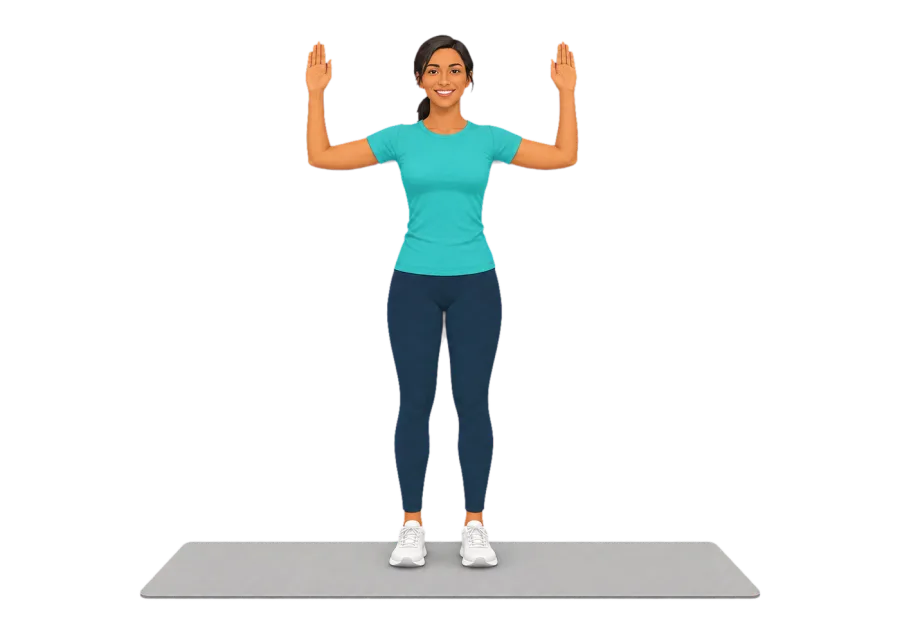
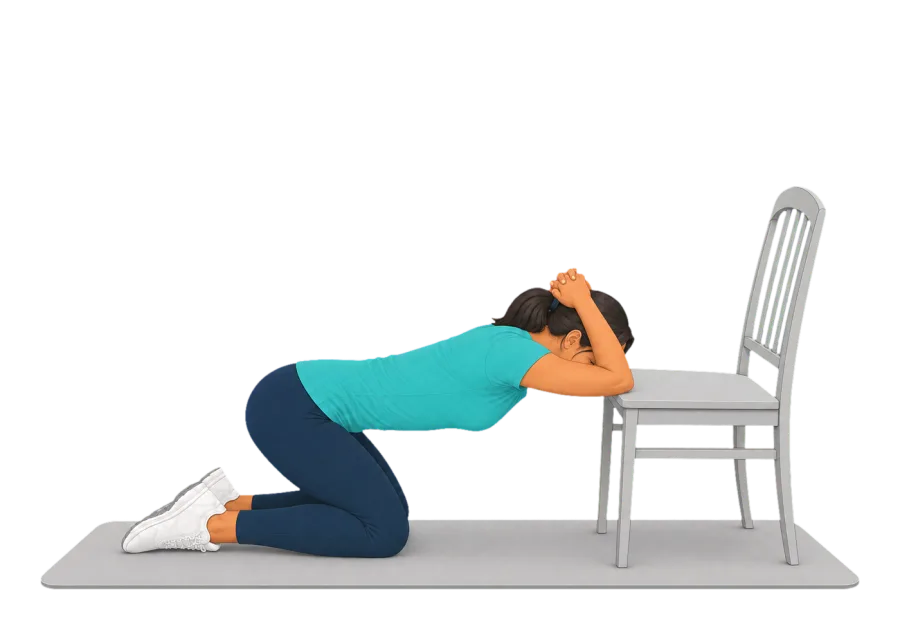
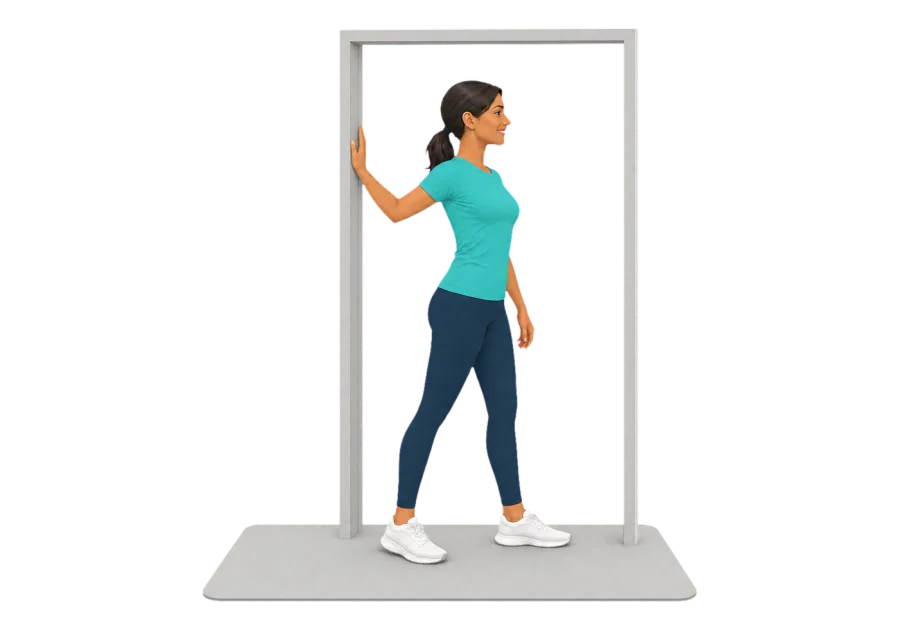
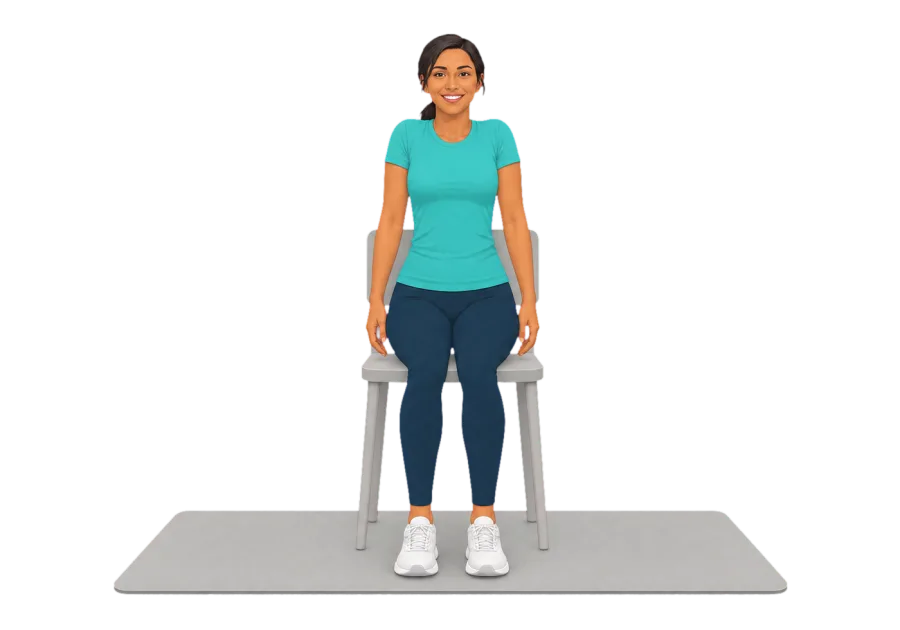
Wall Slides train overhead range with far less stretch at the front of the shoulder. The Bench Lat Stretch and the Doorway Chest Stretch address the tissues most likely to limit the arc, and Shoulder Rolls offer a much smaller and easier movement of the same joints.
Routines With This Move
- Lifter's Full Reset
- Overhead Ready
See Also
Sources
- PVC Pass-through: A Simple Shoulder Mobility Drill (opens in a new tab). Bellevue Club, Reflections magazine, 2021.
- The New Gymnastics for Men, Women, and Children, nineteenth edition (opens in a new tab). Dio Lewis, digitised by the US National Library of Medicine, 1883.
- Pectoralis major (opens in a new tab). Wikipedia.
- Rotator cuff (opens in a new tab). Wikipedia.
- Stick Shoulder Dislocation (opens in a new tab). Exercise.com.
- Diocletian Lewis (opens in a new tab). Wikipedia.
- The Origins of Weight Training for Female Athletes in North America (opens in a new tab). Iron Game History, 1992.
- Shoulder active and assisted exercises (opens in a new tab). Royal Berkshire NHS Foundation Trust, 2022.
Further Reading
- Trapezius (opens in a new tab). Wikipedia.
- Teres major muscle (opens in a new tab). Wikipedia.
- Scapula (opens in a new tab). Wikipedia.
General information about this move, not medical advice. Stop if something hurts, and read our Safety page before you start. If you have a health condition, ask your doctor or physiotherapist first.