What It Is For
The Adductor Rock Back takes the inner thigh through a repeated stretch. Starting on hands and knees, one leg straightens out to the side, and the hips move back towards the kneeling heel and forward again.[1][2] Physical therapist Mike Reinold includes it among hip mobility drills that he recommends generally, and describes straightening one leg as a small trade: the hip gets a little less flexion and the adductors get more attention.[1]
The move sits between a passive stretch and a strength exercise. It asks for control but carries no external load, which suits warm-ups. Rocking gives a stretch that builds and eases with each repetition, in place of one long hold.
The position relates to squatting, lunging and side-to-side movement, where the hips open under load. Coaches value the long-back cue as much as the range itself, since the aim is to move at the hip without simply rounding the lower back.[3][4]
How to Do It
A kneeling drill for the inner thigh. On hands and knees, take one leg straight out to the side with that foot flat, then rock your hips back and forward, keeping your back long. You should feel a stretch along the inner thigh of the straight leg that builds and eases with each rock.
- One leg out to the side
- Keep the back long
- Smooth and easy
Pad your knees with a folded towel or cushion. Skip it if kneeling hurts.
How It Got Its Name
Adductor names the muscle group that brings the thighs together, and rock back describes the backward shift of the hips.[5] The drill is an adaptation of the quadruped rockback, a hands-and-knees exercise in which both knees stay under the body.[1] Exercise libraries use the spellings rockback and rock back interchangeably.[2][3] The first use of the name is not documented.
History
No single inventor is recorded for the Adductor Rock Back, and no first description was found. It appears in coaching writing as a modification of an existing drill, not as a new invention, and its origin is not documented.
The sources found are recent. Reinold, in an article last updated in 2017, sets out the quadruped rockback and its adductor version as established drills.[1] The physiotherapy exercise platform Physitrack lists both a wide-knee hip adductor rock back and a one-leg adductor rockback in its libraries, which shows how the drill has passed into clinical use.[3][2]
Named variations show coaches building on it. In 2013 strength coach Tony Gentilcore credited Eric Cressey with a rocked-back adductor stretch that adds a thoracic rotation, which Cressey worked out shortly before sharing it.[4] A loaded half-kneeling adductor rock, credited to Danny Foley, appears in the exercise library of the weightlifting site Catalyst Athletics.[8] These named credits apply to the variations only, and the basic drill remains unattributed.
Muscles and Tendons
The adductors form the medial compartment of the thigh. The group includes adductor longus, brevis and magnus, along with gracilis and pectineus. Most begin on the pubis or ischium and attach to the thigh bone, and their main shared action is drawing the thigh towards the midline.[5] Holding one leg out to the side places them at length, and moving the hips back increases the distance between their origin and insertion.
Two muscles are worth singling out. Gracilis is the only one in the group that reaches the shin, and it passes behind the inner side of the knee, so a straight knee adds tension to it.[6] Adductor magnus has a portion that arises from the sitting bone and is closely related to the hamstrings.[7] As the hips travel back and the hip bends, that portion comes under more stretch.
The abdominals and back extensors hold the spine long, and the hip of the kneeling leg controls the rocking. Tony Gentilcore, writing about a related drill, notes that the rocked-back position makes compensation through the lower back less likely.[4] With the foot flat and the leg straight, the inner edge of the knee should feel no strain. If it does, the range or foot position needs adjusting.
Stretched
- Adductor longus and brevis
- Inner thigh of the straight leg, lengthened as the hips travel back and away from that foot
- Adductor magnus
- The largest adductor, including its hamstring portion, lengthened as the hip flexes
- Gracilis
- Long and thin, crossing the knee as well as the hip, so it feels the straight-knee position most
- Pectineus
- A small muscle at the top of the inner thigh
Working
- Abdominals and back extensors
- Keep the back long so the movement comes from the hip
- Gluteals and hip muscles of the kneeling leg
- Control the rock in both directions
- Shoulder and arm muscles
- Support the upper body on the hands
Tendons and Fascia
- Adductor tendons at the pubis
- The tendons near the groin at the top of the inner thigh, where a stretch can be felt
- Pes anserinus
- Where the gracilis tendon joins other tendons on the inner shin below the knee
Where It Is Used Today
The drill is used mainly in strength and conditioning warm-ups and physiotherapy exercise programmes. Gentilcore suggests related rocked-back work in a warm-up or between heavy sets, at around five or six repetitions a side.[4] Physitrack presents the adductor rockback for use in programmes set by practitioners.[2] Sports that demand side-to-side movement give the inner thigh particular attention. A 2002 review identified ice hockey and football as especially prone to adductor strains, with groin strains making up about 10 per cent of injuries in professional ice hockey.[9]
The same review places the emphasis on hip strength: risk factors included hip muscle weakness and previous injury, and one National Hockey League team recorded fewer adductor strains after adding hip strengthening.[9] A mobility drill like this one is therefore a different tool from strength work such as the Copenhagen adduction. No study of this drill itself was found.
Variations and Related Moves
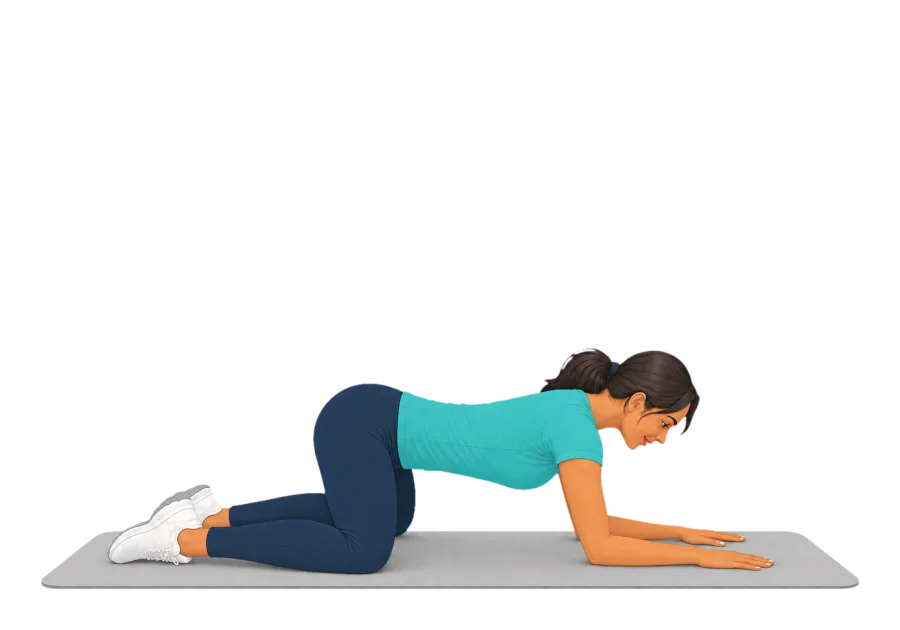
The range can be reduced by rocking only part of the way, and made more intense by pausing at the back of the movement. Keeping both knees on the floor and spreading them wide gives the quadruped rock back, which Physitrack calls a hip adductor stretch, and this is close to the Frog stretch.[3]
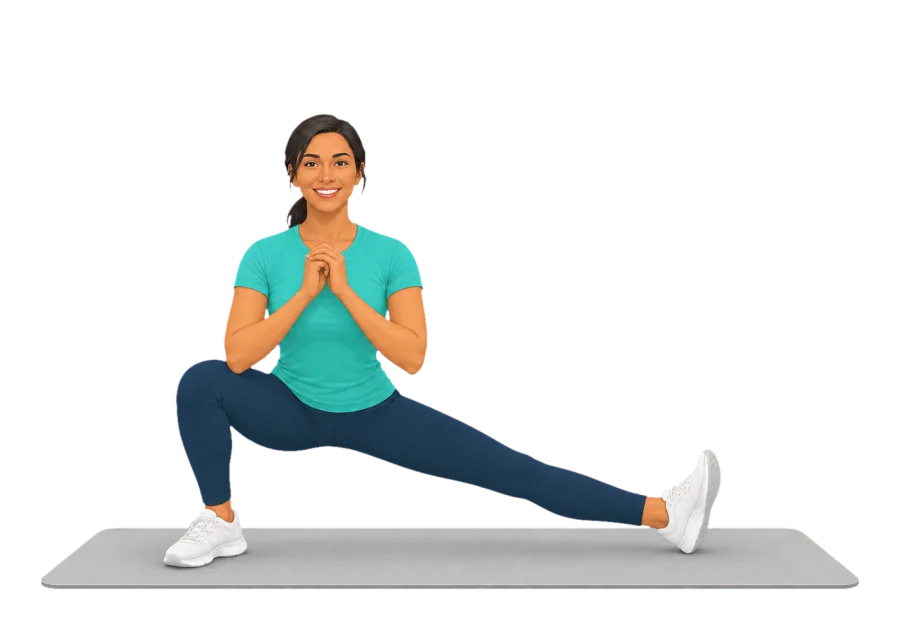
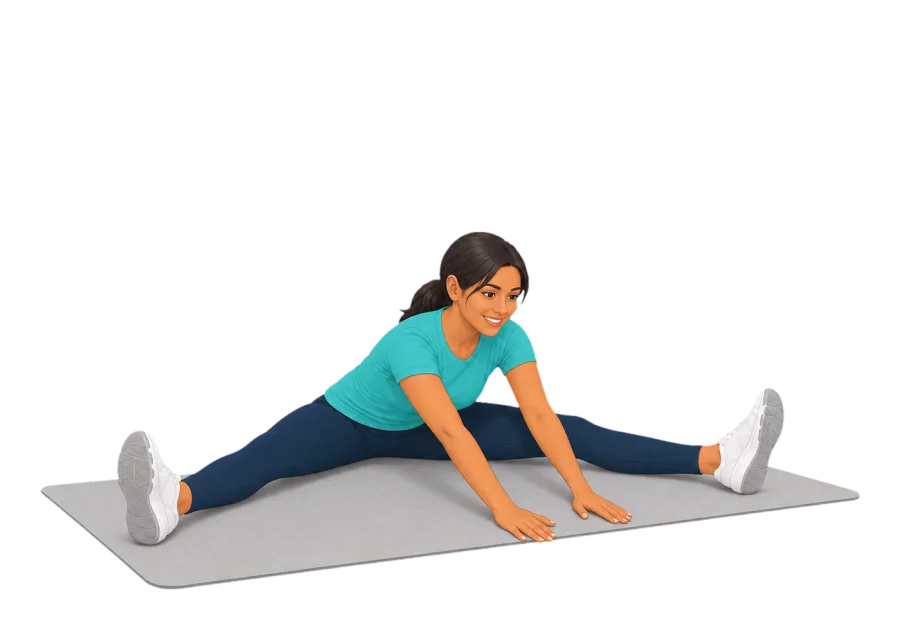
Gentilcore's version adds a rotation of the upper back.[4] The half-kneeling adductor rock adds a kettlebell or dumbbell held against the trunk and builds strength as well as range.[8] The Cossack Squat and Pancake work the same muscles in standing and seated positions.
Routines With This Move
- Hips All Round
- Race Prep: Run, Sled and Lunge
- Squat Depth
See Also
Sources
- 6 Hip Mobility Drills Everyone Should Perform (opens in a new tab). Mike Reinold, 2017.
- How to perform the Adductor Rockback (opens in a new tab). Physitrack.
- Quadruped rock back – hip adductor stretch (opens in a new tab). Physitrack.
- Exercises You Should Be Doing: Rocked Back Adductor Stretch w/ Extension-Rotation (opens in a new tab). Tony Gentilcore, 2013.
- Adductor muscles of the hip (opens in a new tab). Wikipedia.
- Gracilis muscle (opens in a new tab). Wikipedia.
- Adductor magnus muscle (opens in a new tab). Wikipedia.
- Half-Kneeling Adductor Rock (opens in a new tab). Catalyst Athletics.
- Adductor muscle strains in sport (opens in a new tab). Sports Medicine, 2002.
Further Reading
- Pes anserinus (opens in a new tab). Wikipedia.
- Mobility Exercise of the Week: Table Adductor Dips (opens in a new tab). Eric Cressey.
General information about this move, not medical advice. Stop if something hurts, and read our Safety page before you start. If you have a health condition, ask your doctor or physiotherapist first.