What It Is For
The Bird Dog teaches the trunk to stay still while the arms and legs move. From hands and knees, the person reaches one arm forward and the opposite leg back until both are roughly level with the floor, holds, and changes sides. It is used to train coordination and endurance in the muscles along the spine and across the hips, with the emphasis on keeping the pelvis and lower back level.[1][2]
McGill describes it as the extensor part of a three-exercise set, meant to challenge the back muscles at relatively low spine load. The other two are a form of curl-up and the side bridge.[3] Physiotherapists often include it in programmes for people with low back pain, and that is the setting in which it first became well known. Its value in that setting is a matter of clinical judgement, and the laboratory studies below measure muscle activity, not outcomes.
It is also used by people with no back complaint at all, as a warm-up or a low-impact way to train balance, and by coaches who want a simple check on whether an athlete can move a hip without moving the spine.
How to Do It
A balance and control move for your back and buttocks. On hands and knees, reach one arm forward and the opposite leg back, keeping your hips level as if a cup of tea were resting on your lower back. Swap sides slowly. You should feel your back and buttock muscles working together, without any arching.
- On hands and knees
- Hips stay level
- Move slowly
Pad your knees with a folded towel or cushion. Skip it if kneeling hurts.
Spread your fingers and keep weight even. Use fists or forearms if your wrists complain.
How It Got Its Name
No source found for this article explains the name or records who coined it. Early research avoided it: the 2001 Southern California study simply calls the exercise the Quadruped, and McGill's papers write it as one word, birddog.[4][3] The usual assumption is that the outstretched arm and leg recall a bird's wing and a dog's leg, or a pointing gun dog, but this is folk explanation and not a recorded origin.
In modern yoga the same shape is taught as Balancing Table, or Dandayamana Bharmanasana.[6] That Sanskrit name was not found in any classical text during research for this article and should be treated as a modern label.
History
No inventor is recorded. Raising an opposite arm and leg on all fours is an obvious exercise, and earlier forms may well exist in gymnastics or physical therapy. What can be documented starts in the late 1990s. McGill's 2009 paper traces the evidence for this exercise to a 1998 study by J. P. Callaghan, J. L. Gunning and McGill on lumbar spine load and muscle activity in extensor exercises.[3] The 1998 paper itself could not be read for this article, so its detail is not given here.
In 2001 a team at the University of Southern California compared the Quadruped with the Dying Bug and recorded how muscle activity changed as each became more difficult.[4] In 2004 McGill's group ranked a set of stabilisation exercises by muscle activity, spine compression and stability.[7]
The exercise reached its wide audience through McGill, a spine biomechanist at the University of Waterloo. His 2009 paper with Amy Karpowicz describes curl-up, side bridge and birddog as the big 3, and notes that they had by then entered several back exercise programmes and trials.[3] Popular accounts sometimes credit him with developing the bird dog. It is fairer to say that he studied it and made it famous.[1]
Muscles and Tendons
This is a working move and almost no stretch. Lifting one leg calls on the gluteus maximus, and the erector spinae hold the trunk level; the erector spinae and gluteus maximus were most active on the side of the raised leg in a 2001 study.[4] The erector spinae run in three columns along the spine and are covered by the thoracolumbar fascia in the lower and middle back.[5]
The abdominal wall works as well, because taking two limbs off the floor leaves a diagonal twisting load that the trunk has to resist. In the same study the abdominal obliques were significantly more active than the rectus abdominis.[4] Raising the arm brings in the upper back extensors. A slight outward movement and further lift of the arm took the upper back extensors from 23 to 35 per cent of maximum in one study.[3]
The supporting arm and knee take more load than usual, so the supporting shoulder and the gluteus medius on the supporting side work to keep the pelvis from dropping.
Stretched
- Hip flexors of the raised leg
- Mild lengthening as the thigh reaches back; not the purpose of the move
Working
- Erector spinae
- Hold the trunk against the weight of the raised limbs
- Gluteus maximus
- Lifts and holds the leg behind
- Gluteus medius
- Keeps the pelvis level on the supporting side and works more when the limbs move
- Obliques and rectus abdominis
- Resist the twist and the sag of the trunk
- Latissimus dorsi
- Active in the raised and supporting arm
- Shoulder muscles
- Raise the reaching arm and steady the supporting shoulder
Tendons and Fascia
- Thoracolumbar fascia
- Covers the erector spinae in the lower and middle back
What Research Has Looked At
Souza and colleagues measured 12 healthy people and found that no muscle went above 41 per cent of maximal voluntary contraction, levels they thought unlikely to give a strengthening effect in healthy subjects. The trunk and hip extensors did more of the work here than in the Dying Bug.[4]
McGill and Karpowicz studied eight healthy men, five of whom repeated the tests with expert correction. Challenge appeared to rise in this order: arm alone, leg alone, arm and leg, added abdominal brace, then added shoulder movement. Drawing small squares with the hand and foot changed activity across many muscles, and expert correction took spine flexion from 16 degrees to none in that variation.[3][9] These are small laboratory samples of healthy people, and they describe technique, not outcomes.
Where It Is Used Today
Harvard Health Publishing has described a typical routine, with holds of about 10 seconds, five times a side, as part of McGill's three exercises.[1] The American Council on Exercise lists it among exercises for dynamic stabilisation and suggests cueing a long line from head to tailbone.[2]
It appears in physiotherapy clinics, gyms, group fitness classes, yoga and Pilates. A related movement, quadruped hip extension, ranked among the exercises with the most gluteal activity relative to the tensor fascia lata in a 2013 fine-wire study.[8]
Variations and Related Moves
The easiest forms lift one limb at a time, usually leg first and then arm together with leg once that is steady.[3] The harder form pauses at full reach and draws small squares with the hand and foot, moving only at the shoulder and hip.[9]
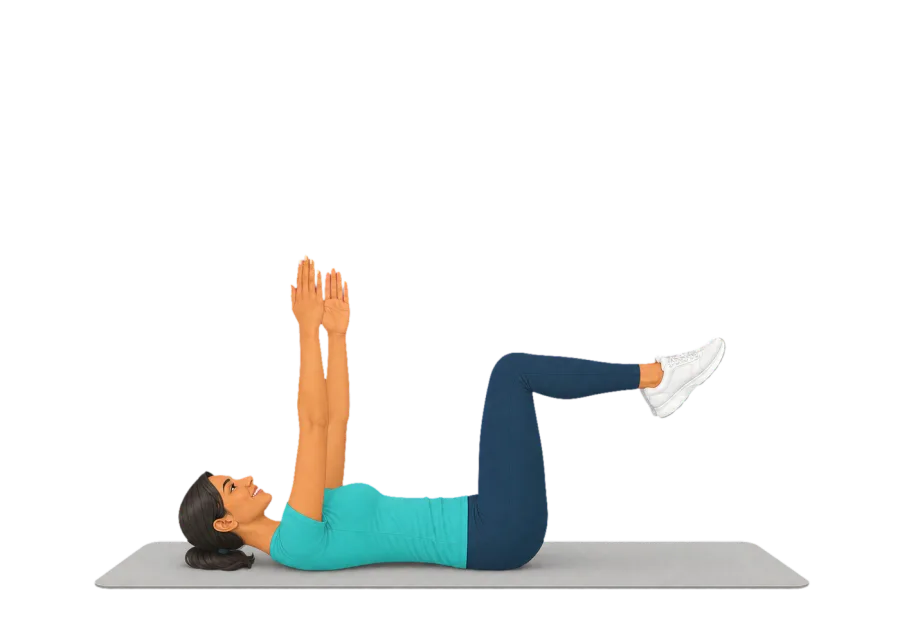
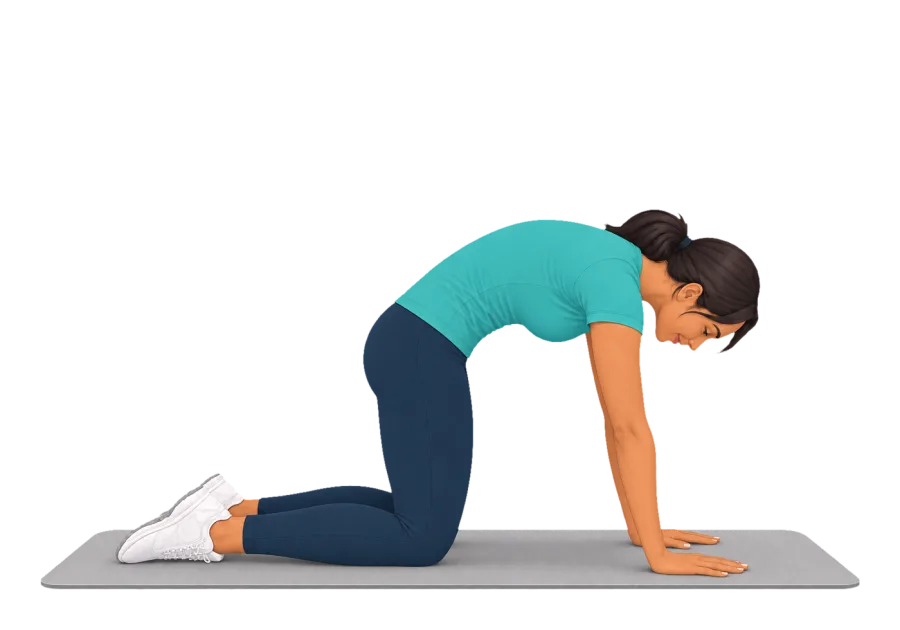
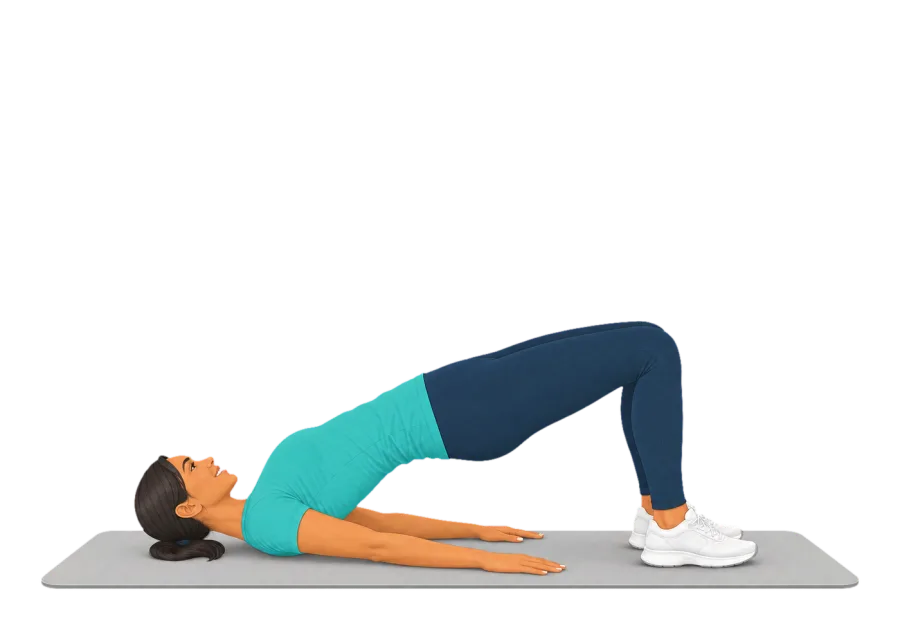
The Dead Bug is the same pattern lying on the back.[2] Cat Cow uses the same starting position for spine movement instead of stillness, and the Bridge trains the gluteal muscles with both feet on the floor.
Routines With This Move
- Low Back Ease
- Low Back Long Ease
See Also
Sources
- Three moves for better spine health (opens in a new tab). Harvard Health Publishing, 2020.
- Spinal Stability: To Brace or Not to Brace? (opens in a new tab). American Council on Exercise, 2018.
- Exercises for Spine Stabilization: Motion/Motor Patterns, Stability Progressions, and Clinical Technique (full text) (opens in a new tab). Archives of Physical Medicine and Rehabilitation, author's copy at BackFitPro, 2009.
- Electromyographic activity of selected trunk muscles during dynamic spine stabilization exercises (opens in a new tab). Archives of Physical Medicine and Rehabilitation, 2001.
- Erector spinae muscles (opens in a new tab). Wikipedia.
- Dandayamana Bharmanasana / Balancing Table pose (opens in a new tab). Tonic Mag.
- Quantifying tissue loads and spine stability while performing commonly prescribed low back stabilization exercises (opens in a new tab). Spine, 2004.
- Which exercises target the gluteal muscles while minimizing activation of the tensor fascia lata? Electromyographic assessment using fine-wire electrodes (opens in a new tab). Journal of Orthopaedic & Sports Physical Therapy, 2013.
- Exercises for spine stabilization: motion/motor patterns, stability progressions, and clinical technique (opens in a new tab). Archives of Physical Medicine and Rehabilitation, 2009.
Further Reading
- Dead Bug (opens in a new tab). National Academy of Sports Medicine.
- Transverse abdominal muscle (opens in a new tab). Wikipedia.
General information about this move, not medical advice. Stop if something hurts, and read our Safety page before you start. If you have a health condition, ask your doctor or physiotherapist first.