What It Is For
Child's Pose is used chiefly as a rest. Between harder postures, it gives the arms and legs a break while the breath settles, and it can also follow backbends and inversions as a counter position.[1] Yoga Journal notes that the back, glutes, thighs, shins and ankles may all feel a stretch.[2]
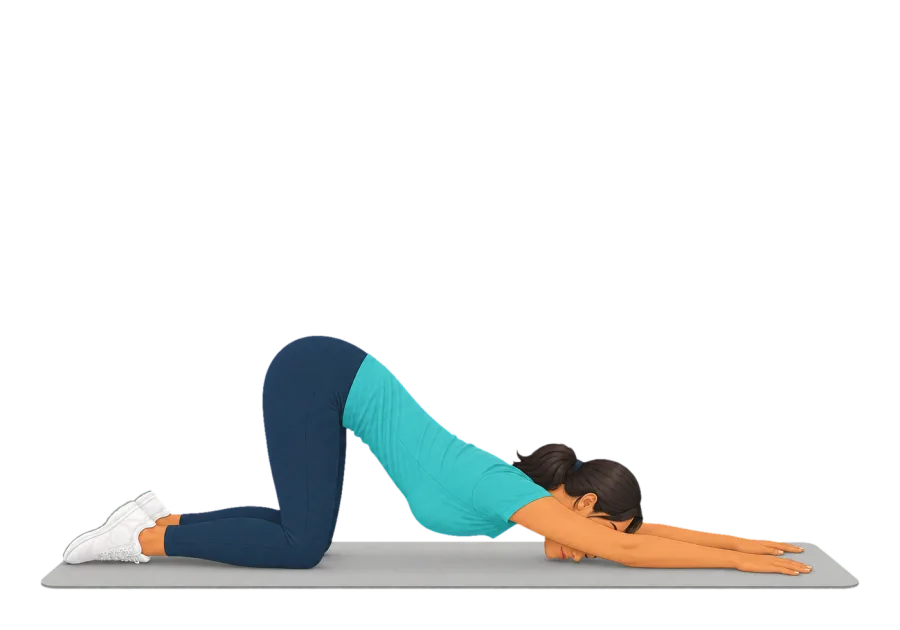
The version with the knees wide and the big toes together gives the trunk room to drop between the thighs. The arms reach forward, the hips settle back and the forehead rests. It suits people who find the narrow-kneed form cramped, and it also changes what is felt: reaching the arms forward brings the sides of the ribs and the upper arms into the stretch.
How to Do It
A restful kneeling shape to settle into between harder moves. Kneel with your knees wide and big toes together, then sit your hips back and walk your hands forward until your forehead rests. You should feel a gentle lengthening through your lower back, hips and the sides of your ribs.
- Knees wide, big toes together
- Sink your hips to your heels
- Let your forehead rest
Pad your knees with a folded towel or cushion. Skip it if kneeling hurts.
How It Got Its Name
Balasana combines the Sanskrit bala, meaning child, with asana, meaning posture or seat.[1] Yoga Journal gives the same reading.[2] The English name is a direct translation, and it reflects the curled shape. No source records who first used the name, and the Sanskrit term is a modern label, not one taken from a medieval text.
History
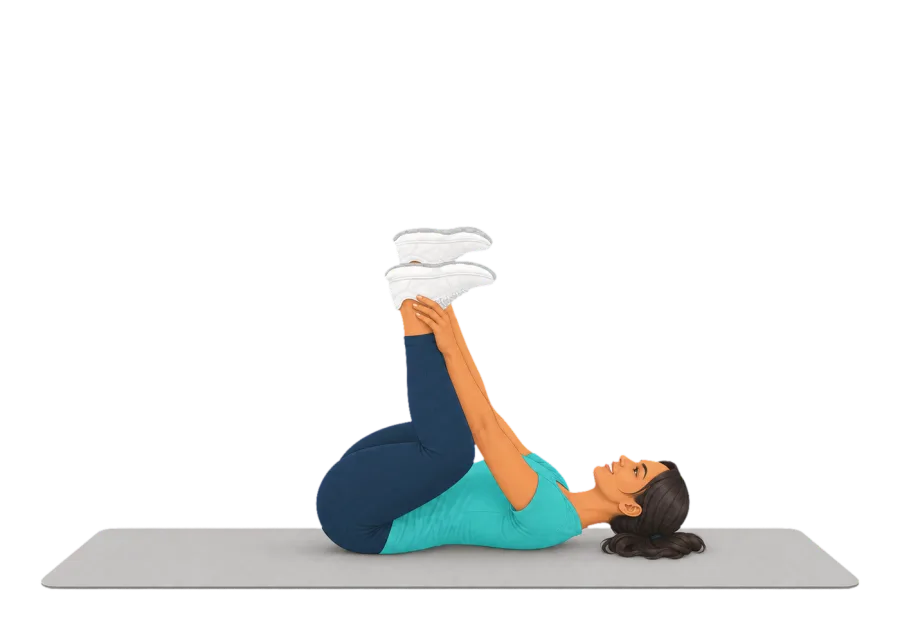
For a pose that looks timeless, Child's Pose has a short written record. It is not described before the twentieth century.[1] The Sritattvanidhi, a 19th-century Mysore manual, does illustrate a pose called Kandukasana, or ball pose, but this corresponds to Ananda Balasana, the Happy Baby shape on the back, and not to this kneeling fold. The similar name should not be mistaken for an early record of this pose.[1][6]
The earliest close parallel usually cited comes from outside yoga. Niels Bukh's Primary Gymnastics, published in Denmark in 1924, describes a similar position.[1][7] Whether that had any direct bearing on yoga practice is not documented. Singleton's broader argument for gymnastic influence on modern yoga is contested.[8]
The pose then entered yoga teaching in the twentieth century. One list of asanas associates it with Tirumalai Krishnamacharya's teaching, and later handbooks, including the Sivananda Yoga Centre's 1983 Book of Yoga, gave it to a wide readership.[6][1] No single inventor is recorded.
Muscles and Tendons
The pose folds the hips, knees and ankles fully, and the spine rounds. Those positions lengthen the muscles at the back of the hip and along the spine. The erector spinae, which extend the back, are placed at length when the back rounds.[3] Yoga Journal's anatomy notes also point to the rhomboids, middle trapezius and rear deltoids of the upper back, and to a slight stretch of the quadriceps and hips.[2]
The arm position decides how much the latissimus dorsi takes part. This muscle runs from the lower spine, the thoracolumbar fascia and the pelvis to the upper arm, so reaching the arms forward as the hips travel back draws it long.[4] The fascia itself is not a separate target, but the latissimus helps to tension it.[5] Almost no muscle needs to hold the position, which is much of its appeal as a rest. The main limit for many people is the knee or ankle, not the back.
Stretched
- Erector spinae and low back muscles
- Lengthen as the spine rounds over the thighs
- Latissimus dorsi
- Drawn long when the arms reach forward
- Gluteus maximus
- Lengthened as the hips fold fully
- Inner thigh muscles
- Mildly stretched when the knees are wide
- Quadriceps and shin muscles
- A slight stretch at the front of the thigh and ankle in full kneeling
- Rhomboids, middle trapezius and rear deltoids
- Upper back muscles named by Yoga Journal's anatomy notes
Working
- Little active work
- The pose is a resting one; gravity supplies most of the stretch
- Arm and shoulder muscles
- Light effort if the arms actively reach forward
Tendons and Fascia
- Thoracolumbar fascia
- Broad sheet at the lower back, which the latissimus dorsi helps to tension
Where It Is Used Today
The pose is standard in most modern yoga classes, where teachers offer it as a place to pause at any time. It also appears as a rest after headstands.[1]
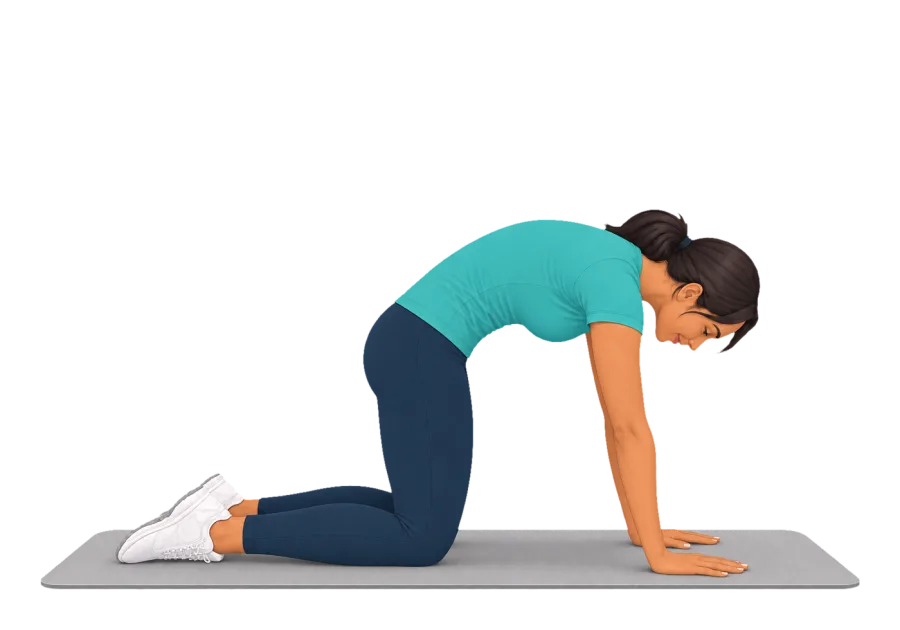
A closely related movement appears in exercise sheets for people with low back pain. One Northern Ireland sheet includes a bottom to heels stretch that begins on all fours and moves the hips towards the heels. It uses plain language, and it does not call the movement Child's Pose.[9] Pilates and gym classes often use similar shapes at the end of a session, and athletes use it to lengthen the lats and hips after overhead work.
Variations and Related Moves
Yoga Journal lists several adjustments. A bolster can sit between the thighs to support the chest and head, a block can support the forehead, and the arms can reach forward or lie alongside the body. Knee width can also change, with narrow knees giving a more enclosed feeling and wide knees giving the belly more room.[2] A cushion under the hips is a common choice when the hips do not reach the heels, and a rolled blanket behind the lower legs is another option.[1]
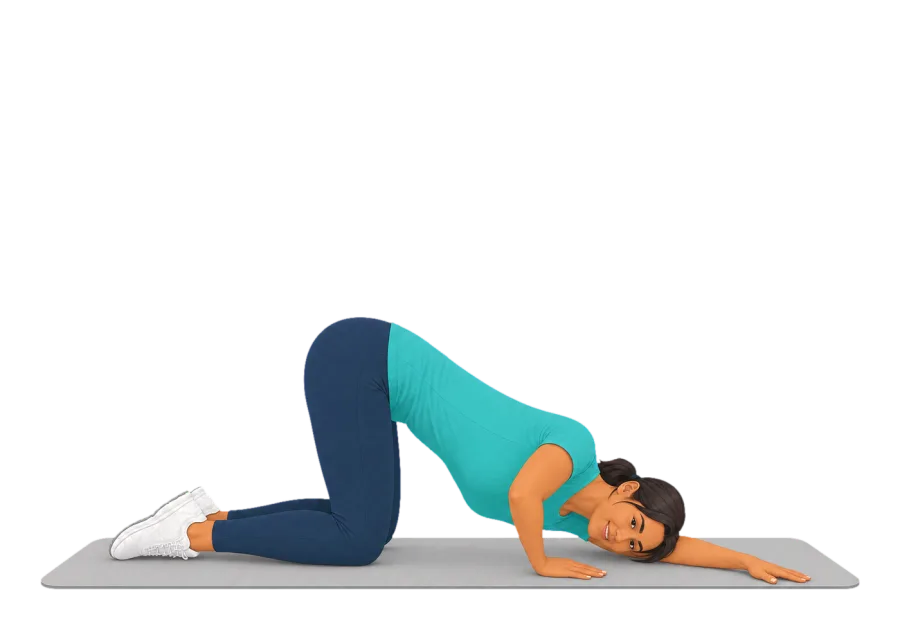
Walking the hands to one side lengthens the opposite side of the trunk. Parsva Balasana, also called Thread the Needle, slides one arm beneath the body with that shoulder on the floor. Uttana Shishosana, or Extended Puppy Pose, keeps the hips high over the knees. Sasangasana, or Rabbit Pose, lifts the tailbone and increases the rounding of the spine.[1]
Routines With This Move
- After the Shift
- End of the Working Day
- Fifteen Minute Reset
- Five Minute Reset
- Lights Out
- Long Shift Recovery
- Long Wind Down
- Low Back Ease
- Low Back Long Ease
- Low Back Quick Ease
- Morning Wake Up
- Upper Body Unwind
- Wind Down
See Also
Sources
- Balasana (opens in a new tab). Wikipedia.
- Child's Pose: How to Practice Balasana (opens in a new tab). Yoga Journal.
- Erector spinae muscles (opens in a new tab). Wikipedia.
- Latissimus dorsi muscle (opens in a new tab). Wikipedia.
- Thoracolumbar fascia (opens in a new tab). Wikipedia.
- List of asanas (opens in a new tab). Wikipedia.
- Niels Bukh (opens in a new tab). Wikipedia.
- Yoga Body (opens in a new tab). Wikipedia.
- Lower Back Pain Exercises (opens in a new tab). Education Authority Northern Ireland.
Further Reading
- Tirumalai Krishnamacharya (opens in a new tab). Wikipedia.
- Light on Yoga (opens in a new tab). Wikipedia.
General information about this move, not medical advice. Stop if something hurts, and read our Safety page before you start. If you have a health condition, ask your doctor or physiotherapist first.