What It Is For
The Glute Roll uses body weight on a roller or ball to apply pressure to the muscles of the buttock. The person sits on the roller, crosses one ankle over the opposite knee, and leans towards the side of the crossed leg, which brings the pressure into that buttock and takes it off the sitting bones.
The National Academy of Sports Medicine names the glutes and piriformis as regular targets for people who spend their days at a desk, and suggests smaller balls for these areas because a roller fits them poorly.[1] The move also appears in warm-ups before lower body training, since rolling is commonly placed before dynamic exercise.[1][2]
It is a pressure technique more than a stretch, although the crossed-leg position adds a mild stretch of its own. The aim is firm, tolerable pressure in muscle, kept away from bone and from any nerve sensation.
How to Do It
Self-massage for the buttock, using a roller or ball. Sit on the roller, cross one ankle over the opposite knee and lean into that side, making small, slow rolls. You should feel firm pressure in the muscle of the buttock. If you feel tingling down your leg, shift to a different spot.
- Sit on the roller, cross one ankle
- Lean into that side
- Small slow rolls
How It Got Its Name
Glute is everyday shorthand for the gluteal muscles, and the name simply states the area rolled. Piriformis comes from the Latin for pear-shaped, a name credited to the anatomist Adriaan van den Spiegel of Padua.[4] The crossed-leg position is often called a figure four, after the shape the legs make. The first use of the name Glute Roll is not documented.
History
The Glute Roll has no separate history of its own, and no inventor is recorded. It is one application of foam rolling, whose story begins with Moshe Feldenkrais, the founder of a method of movement awareness. Accounts disagree about dates: one places his use of foam packing rollers in the mid-1970s, and another places their use by his practitioners in the 1980s, as supports for body and balance work.[7][8]
The self-massage use is dated to 1987, when physical therapist Sean Gallagher began rolling on them. He is said to have shared the idea with Jerome Robbins, and Broadway dancers then took it up.[8][7] In the 1990s Mike Clark promoted it as self-myofascial release, and his book Integrated Training for the New Millennium appeared in 2001.[8] These are secondary accounts, and they rest on few primary records.
Balls serve the same purpose for small areas. The American Council on Exercise now lists tennis balls and golf balls as alternatives to a roller, and Harvard guidance mentions a tennis ball for small, tight spots.[6][5] Who first combined the crossed-ankle position with a roller is not documented. The figure-four shape itself is common across stretching and yoga.
Muscles and Tendons
The gluteal region has three layers of large muscle. Gluteus maximus, the largest and most superficial, gives the buttock its shape. Gluteus medius lies on the outer surface of the pelvis beneath it, and gluteus minimus sits beneath that.[3] A roller reaches mainly the outermost layer. Leaning to the side brings some pressure to the upper outer area, where gluteus medius lies.
Under gluteus maximus are the small lateral rotators of the hip, including piriformis, which runs from the front of the sacrum to the top of the thigh bone.[4] Crossing the ankle over the knee bends the hip and turns it outwards, which draws gluteus maximus and these rotators longer. How much pressure reaches them through the thick outer muscle has not been well measured, so any claim that a roller works directly on piriformis should be read with caution.
The sciatic nerve leaves the pelvis in the same region. It usually runs below piriformis, and in a minority of people passes through it.[4] This is why tingling or a shooting sensation down the leg is a reason to shift position. Harvard guidance also advises keeping rollers off bones, naming the pelvis, and the American Council on Exercise warns against rolling directly on the lumbar spine.[5][6]
Stretched
- Gluteus maximus
- Mainly pressed by the roller, with a mild stretch from the crossed-leg position
- Piriformis and deep hip rotators
- Lengthened lightly as the crossed thigh turns out with the hip bent
Working
- Arm and shoulder muscles
- The hands behind the body take some of the weight
- Abdominals
- Hold the trunk steady and control the lean
- Thigh muscles of the supporting leg
- Drive the small rolling movements
Tendons and Fascia
- Gluteal fascia
- The connective tissue covering the outer gluteal muscles, under the roller
- Sciatic nerve
- A nerve, not a tendon: it passes through the buttock below piriformis in most people, and is why tingling is a sign to move
What Research Has Looked At
The most direct study of this region was published in 2018 by MacGregor Hall and Chadwick Smith. They had 27 healthy young adults roll either the gluteal muscles or the iliotibial band in separate sessions, with a no-rolling session for comparison. Rolling the glutes improved passive hip adduction by about 14.8 per cent, significantly more than the other sessions, while rolling the iliotibial band gave about 2 per cent.[10] The authors suggested that the conventional explanation of foam rolling, based on fascial adhesions, may need to be reconsidered.[10]
Wider reviews put this in context. A 2020 meta-analysis of 32 studies reported a large pooled increase in range of motion across the body, with no apparent harm, while being unable to confirm direct performance benefits.[11] A 2019 meta-analysis found smaller effects, with a flexibility gain of about 4 per cent as a warm-up.[12] Neither focused on the glutes. No study of the crossed-ankle version was found.
Where It Is Used Today
The move is taught by trainers. The National Academy of Sports Medicine sets rolling before stretching and strengthening in its Corrective Exercise Continuum, and describes rolling as optional after training or on rest days.[1] The American Council on Exercise suggests rolling slowly over short distances and holding tender spots for 30 to 60 seconds.[6] Harvard guidance suggests a soft roller at first, moving to a firmer one later.[5]
The language around rolling has changed. The National Academy of Sports Medicine now advises its trainers to stop talking about breaking up tissue or releasing fascia.[1] An international expert panel in 2021 agreed that open wounds and bone fractures rule rolling out, and that deep vein thrombosis and local inflammation call for caution, though it stressed that clinical data are needed.[9]
Variations and Related Moves
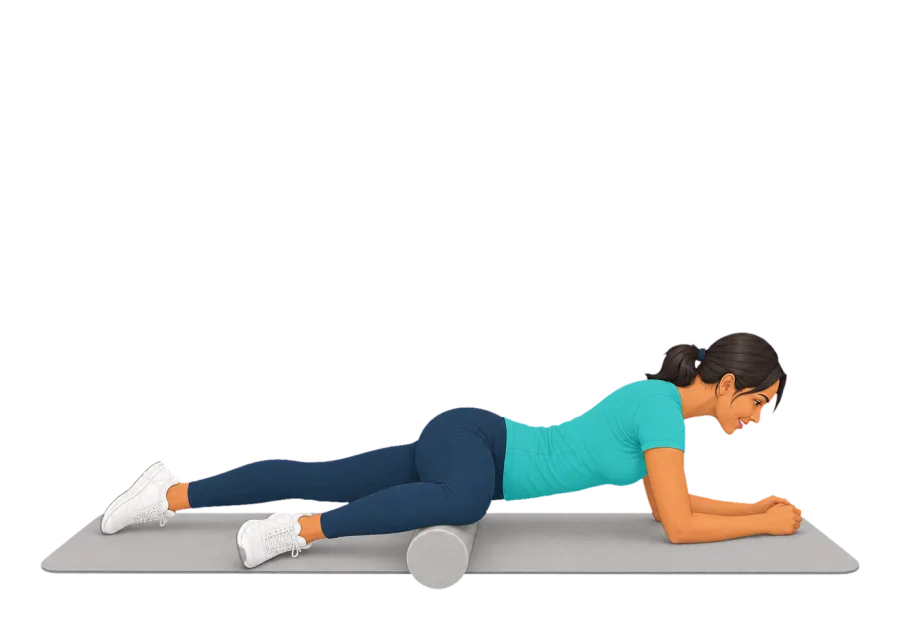
A soft ball held between the buttock and a wall gives the gentlest version, since the amount of body weight can be controlled by leaning. A firmer ball on the floor is more intense and more precise, and suits people who find a roller too broad.[1]
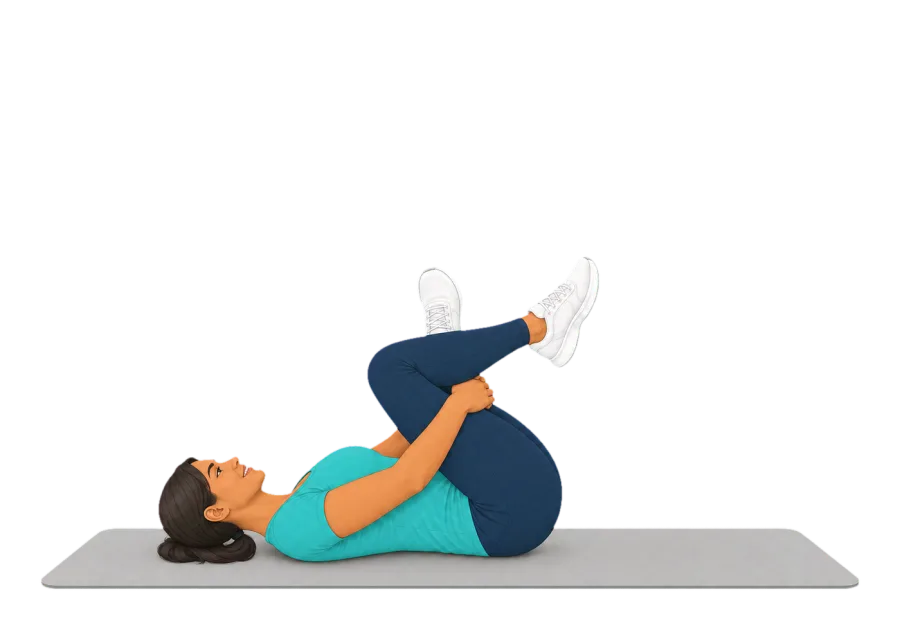
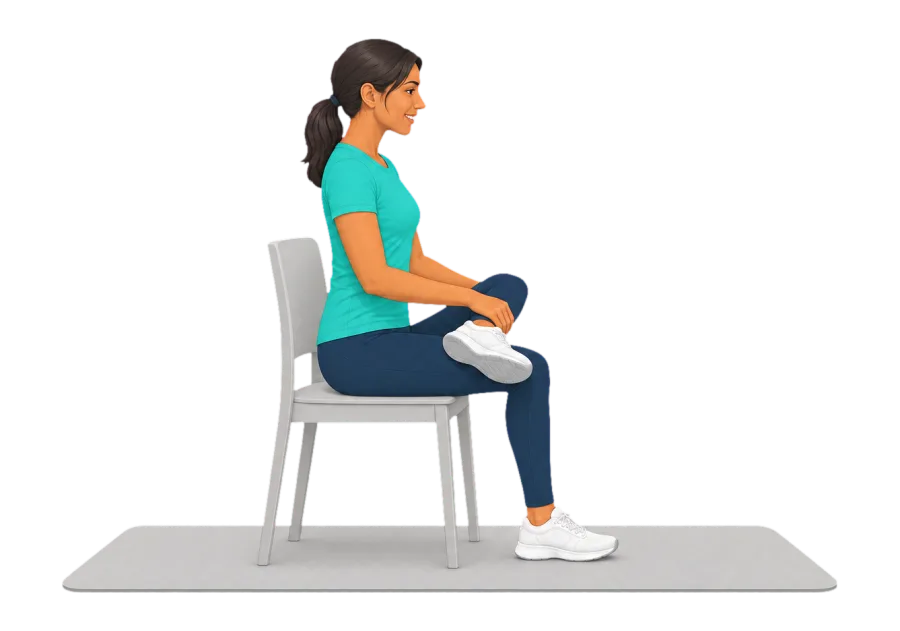
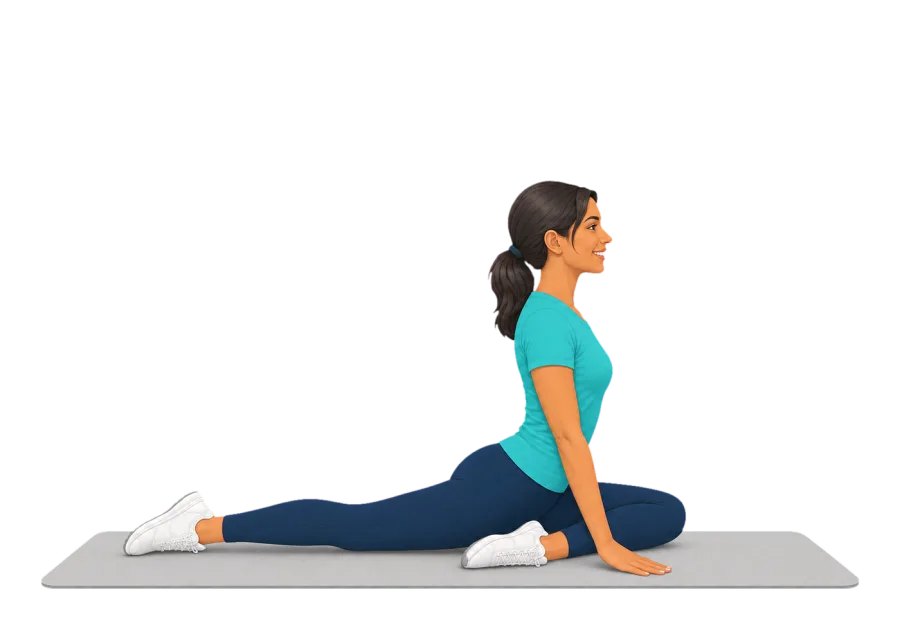
Without the crossed ankle, the roller presses on the muscle with less stretch involved. The same position without the roller is the Seated or Supine Figure Four, which is a pure stretch, and Pigeon and 90/90 sit in the same family of hip rotation positions.
Routines With This Move
- Runner's Legs
See Also
Sources
- Foam Rolling and Self-Myofascial Release: The Trainer's Application Guide (opens in a new tab). National Academy of Sports Medicine, 2026.
- Effects of foam rolling on performance and recovery: A systematic review of the literature to guide practitioners on the use of foam rolling (opens in a new tab). Journal of Bodywork and Movement Therapies, 2020.
- Gluteal muscles (opens in a new tab). Wikipedia.
- Piriformis muscle (opens in a new tab). Wikipedia.
- Foam roller: Could you benefit from this massage tool? (opens in a new tab). Harvard Health Publishing, 2025.
- Foam Rolling 101 (opens in a new tab). American Council on Exercise, 2015.
- Foam Roller (opens in a new tab). History of Physiotherapy (history.physio), 2021.
- The History of the Foam Roller (opens in a new tab). Physical Culture Study, 2016.
- Expert Consensus on the Contraindications and Cautions of Foam Rolling-An International Delphi Study (opens in a new tab). Journal of Clinical Medicine, 2021.
- The Effects of an Acute Bout of Foam Rolling on Hip Range of Motion on Different Tissues (opens in a new tab). International Journal of Sports Physical Therapy, 2018.
- A systematic review and meta-analysis of the effects of foam rolling on range of motion, recovery and markers of athletic performance (opens in a new tab). Journal of Bodywork and Movement Therapies, 2020.
- A Meta-Analysis of the Effects of Foam Rolling on Performance and Recovery (opens in a new tab). Frontiers in Physiology, 2019.
Further Reading
- Foam roller (opens in a new tab). Wikipedia.
- Should You Try Foam Rolling? (opens in a new tab). Cleveland Clinic.
General information about this move, not medical advice. Stop if something hurts, and read our Safety page before you start. If you have a health condition, ask your doctor or physiotherapist first.