What It Is For
Happy Baby takes the hips into a wide, deeply bent position while the floor supports the whole spine. Yoga Journal lists the back, hips and hamstrings as its targets, and notes the stretch through the inner thighs and groins.[1] Since little strength is needed, it suits people who cannot yet reach the same hip range in a squat, and it uses no body weight through the knees.
It is usually placed at the start or the end of a class as a calm, low-effort position.[2] The gentle rocking taught here is a common addition, moving the pressure along the sacrum and giving the stretch a change of angle.
People who feel the pose in the pelvic floor often come to it for that reason. One medically reviewed consumer guide describes it as lengthening those muscles, a general claim rather than a measured one.[2]
How to Do It
A playful, relaxing hip stretch on your back. Draw your knees towards your armpits, hold your feet or shins, and let your lower back stay heavy. Rock gently from side to side if it feels good. You should feel the inner hips and groin opening and your lower back resting on the floor.
- Hold your feet or shins
- Knees toward your armpits
- Rock gently side to side
How It Got Its Name
The name is a direct image of an infant on its back holding its feet. In Sanskrit, bala means child and asana means posture, and ananda is the ordinary word for bliss or happiness.[6] When the compound Ananda Balasana was first used is not documented.
The earlier name is quite different. The Sritattvanidhi calls the posture Kandukasana, Ball Pose, which suits the rounded shape of the body rather than the baby image.[6]
History
The earliest recorded image found for this posture is in the Sritattvanidhi, a 19th-century Kannada work compiled at the Mysore Palace and credited to Maharaja Krishnaraja Wodeyar III. Most of the work concerns the iconography of divine figures, and its section of 122 postures is one part of a much larger whole.[7] Norman Sjoman's The Yoga Tradition of the Mysore Palace reproduced these images, and the pose appears there as Kandukasana.[6]
Some popular pages say that the pose comes from ancient hatha yoga, but none of the sources consulted supports that claim with a text, and it remains unverified. No inventor is recorded. The path from the Mysore illustration to the modern class is not documented either, though the Mysore Palace was the setting in which Krishnamacharya later taught.[8]
Muscles and Tendons
The position combines full hip flexion with wide abduction and outward rotation. The adductors, which run from the pelvis down the inside of the thigh, are the main muscles lengthened. The largest, adductor magnus, arises partly from the ischial tuberosity and has a hamstring-like portion, so it is taken into stretch both by opening the knees and by bending the hip.[3]
The hamstrings also attach at the ischial tuberosity and cross both hip and knee.[4] Their stretch depends on the knee: bent, as in the easier version holding behind the thighs, they stay fairly slack; moving the shins to vertical, as Yoga Journal instructs, tensions them more.[1] Straightening one leg takes this further. The gluteus maximus, the main hip extensor, is lengthened as the hip closes.[5]
Very little muscle work is required. The arms hold the feet lightly, and the hip flexors help only to draw the thighs towards the ribs. The stretch comes from the weight of the legs and the pull of the hands.
Stretched
- Adductors
- Inner thigh and groin, as the knees open wide of the ribs
- Hamstrings
- Back of the thigh, more so as the shins move towards vertical
- Gluteus maximus
- Buttock, as the hips bend fully
- Lower back muscles
- Mildly, as the pelvis tips and the spine rests on the floor
Working
- Biceps and forearm flexors
- Lightly, to hold the feet or shins
- Hip flexors
- A little, to draw the knees towards the armpits
Tendons and Fascia
- Adductor tendons
- Near the groin, where the inner thigh muscles attach to the pelvis
- Hamstring origin
- At the ischial tuberosity, the sitting bone
Where It Is Used Today
The pose is a staple of general yoga classes and is also common in Pilates.[2] It needs no equipment, so it also serves as a simple cool-down for the hips and hamstrings.
The same guide advises against the pose during pregnancy and for those with neck, knee, hip or gluteal injuries.[2]
Variations and Related Moves
Holding behind the thighs rather than the feet suits anyone who cannot reach, or who finds that the head lifts off the floor. Straightening one leg at a time, heel to the ceiling, adds hamstring stretch and brings the move close to a supine hamstring stretch.
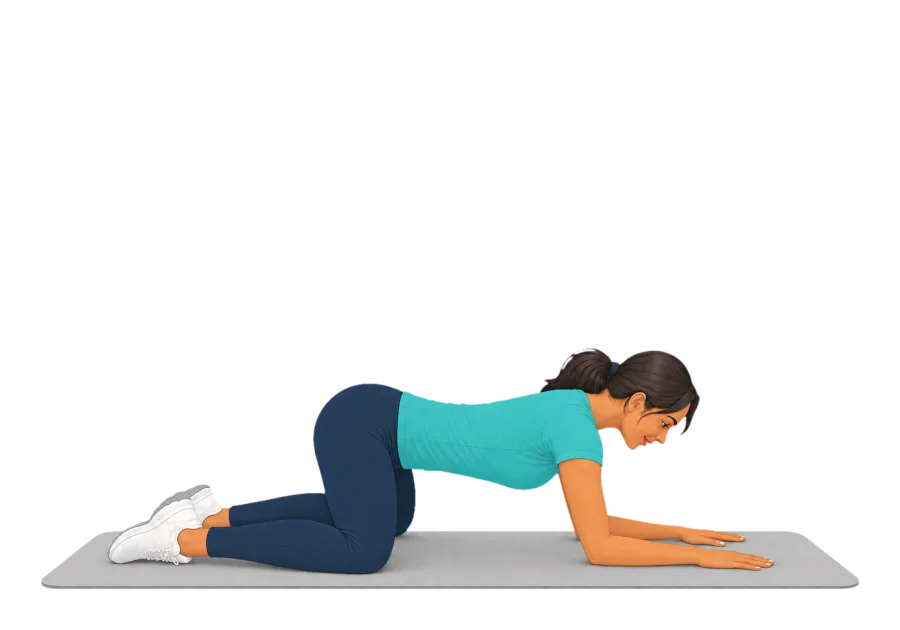
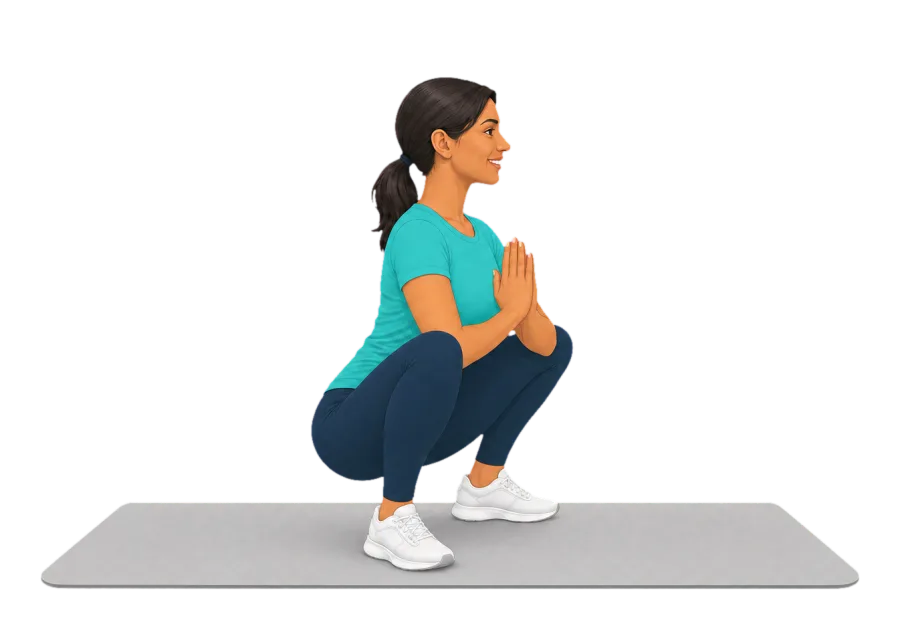
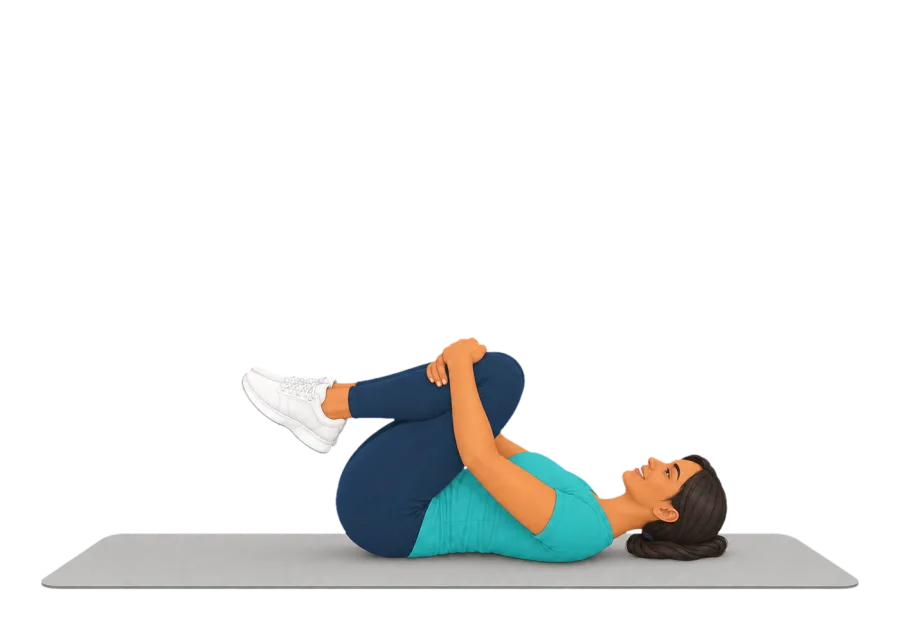
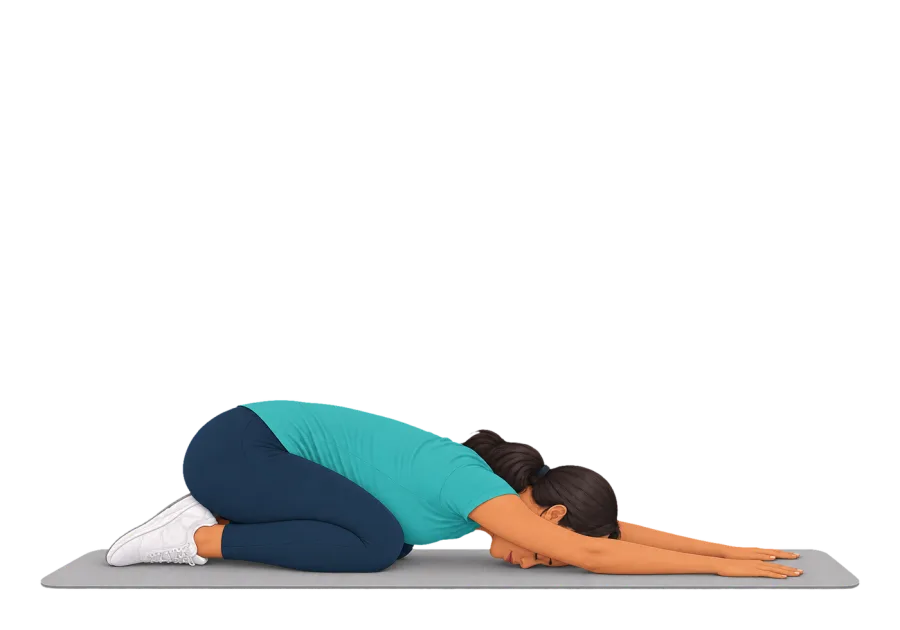
The closest relatives are Frog, which takes the same hip position face down, and the Yoga Squat, which takes it upright with body weight. Child's Pose shares the same root name and the rounded, resting character. Knee Hugs, with the knees together, offer the same hip bend without the wide opening.
Routines With This Move
- After the Shift
- Hip Opener
- Hips All Round
- Hips for Sitters
- Lights Out
- Long Wind Down
- Low Back Long Ease
- Wind Down
See Also
Sources
- Happy Baby Pose: How to Practice Ananda Balasana (opens in a new tab). Yoga Journal.
- Health Benefits of the Happy Baby Pose (Ananda Balasana) (opens in a new tab). Healthline, 2024.
- Adductor magnus muscle (opens in a new tab). Wikipedia.
- Hamstring (opens in a new tab). Wikipedia.
- Gluteus maximus (opens in a new tab). Wikipedia.
- Balasana (opens in a new tab). Wikipedia.
- Sritattvanidhi (opens in a new tab). Wikipedia.
- Yoga as exercise (opens in a new tab). Wikipedia.
Further Reading
- Yin Yoga (opens in a new tab). Wikipedia.
- Restorative yoga (opens in a new tab). Wikipedia.
General information about this move, not medical advice. Stop if something hurts, and read our Safety page before you start. If you have a health condition, ask your doctor or physiotherapist first.