What It Is For
The Foot Roll is self-massage. With one foot on a small ball, the person moves slowly from heel to toes under light pressure, standing with a hand on something steady or sitting down. People use it for the pleasant sensation of firm pressure and to ease a sense of tired feet after a long day on them.
Physiotherapy exercise software includes it as a simple routine: sit or stand, place a small ball under one foot, press down and roll.[1] A 2015 paper described tennis ball rolling of the sole as widely used and advocated.[2] It is worth noting that the NHS page on heel pain recommends regular gentle stretching and does not mention rolling a ball.[3]
How to Do It
A massage for the sole of your foot, lovely after a long day standing. Put a ball under your arch, hold something steady, and roll slowly from heel to toe with light pressure. You can do it seated if you prefer. You should feel a pleasant, firm pressure along the bottom of your foot.
- Ball under the arch
- Roll heel to toe
- Light pressure
How It Got Its Name
Foot roll is an everyday description, with no recorded first use. The technical label self-myofascial release joins myofascial, referring to muscle and its surrounding connective tissue, with release. Reviewers have called that term misleading, because it assumes a mechanism that has not been shown.[6] Names based on the tool, such as tennis ball or golf ball rolling, are also common.
History
No inventor or first description of rolling a ball under the foot has been found. Pressing the feet against a firm object is an obvious way to massage them, and it probably has no single origin.
Two later movements shaped how it is talked about. The first is reflexology. William Fitzgerald, an American ear, nose and throat specialist, introduced zone therapy in the United States in the 1910s, and in the 1930s and 1940s Eunice Ingham, a nurse and physiotherapist, mapped the body onto the feet and renamed the practice. Reviews have found no convincing evidence that reflexology works for any medical condition, and the Foot Roll has no need of its zones.[7]
The second is foam rolling. A history of the foam roller traces it to Moshe Feldenkrais, who used foam cylinders in movement exercises from the mid-1970s. It credits Sean Gallagher, a physical therapist, with using them for self-massage in 1987, and Mike Clark (spelled Clarke in that account) with spreading the phrase self-myofascial release in the 1990s.[8] That timeline rests on secondary accounts. How and when ball rolling for the feet joined this tradition is not documented.
Muscles and Tendons
The main structure under the ball is the plantar fascia, a thick band of connective tissue made mostly of lengthwise collagen fibres. It runs from the heel bone to the toes and blends with the tendon sheaths near their base.[4] It is a tie-rod for the arch, carrying tension when the foot takes weight, and it tightens when the toes bend upward late in each step, in what is known as the windlass mechanism.[4]
Rolling compresses this tissue and the small muscles of the sole. It is not a stretch, and the phrase often used for it, releasing the fascia, is disputed. A 2008 mathematical model estimated that very large forces, outside the normal physiological range, would be needed to produce even 1 per cent compression and shear in plantar fascia.[5] A 2019 review favoured other explanations for how rolling alters sensation and range, such as stimulation of receptors in the skin and fascia, and effects on the nervous system's control of pain and muscle tone.[6]
Little muscle work is involved. The muscles of the rolling leg steer the ball and set the pressure, and the other leg holds balance. Light pressure is the rule, and the feel should stay pleasant.
Working
- Hip and thigh muscles, rolling leg
- Guide the ball and set the pressure
- Stance leg muscles
- Hold balance when the move is done standing
Tendons and Fascia
- Plantar fascia
- Compressed, not stretched, from the heel towards the toes
- Flexor tendon sheaths of the toes
- The fascia blends with these near the ball of the foot
What Research Has Looked At
Direct evidence is thin. A 2015 single-blind pilot trial of 24 volunteers applied tennis ball rolling to both soles once and measured a sit-and-reach test. The rolling group reached further than a no-therapy control group, with a large effect size, but this was one small study of an immediate change, and its authors suggested improvements for later research.[2]
Wider reviews concern rollers on other parts of the body. A 2015 systematic review reported short-term gains in flexibility and reduced muscle soreness, without harm to athletic performance, and conflicting evidence for long-term flexibility.[9] The 2019 review judged that there was insufficient evidence that release of myofascial restrictions is the main mechanism.[6]
Where It Is Used Today
The move is common among runners, yoga and Pilates students, dancers and people who work on their feet. Clinicians add it to home programmes, and exercise software supplies ready-made instructions.[1]
A popular idea holds that rolling the sole loosens muscles further up the back of the body along a connected line. The 2015 trial below was designed to test this idea, which rests on the proposed anatomy train concept.[2]
Variations and Related Moves
Sitting is the easier form, because less body weight reaches the ball. A firmer ball increases pressure. Some people add a slower pause on a tender spot, or roll across the foot as well as along it, though no source establishes that any pattern is better.
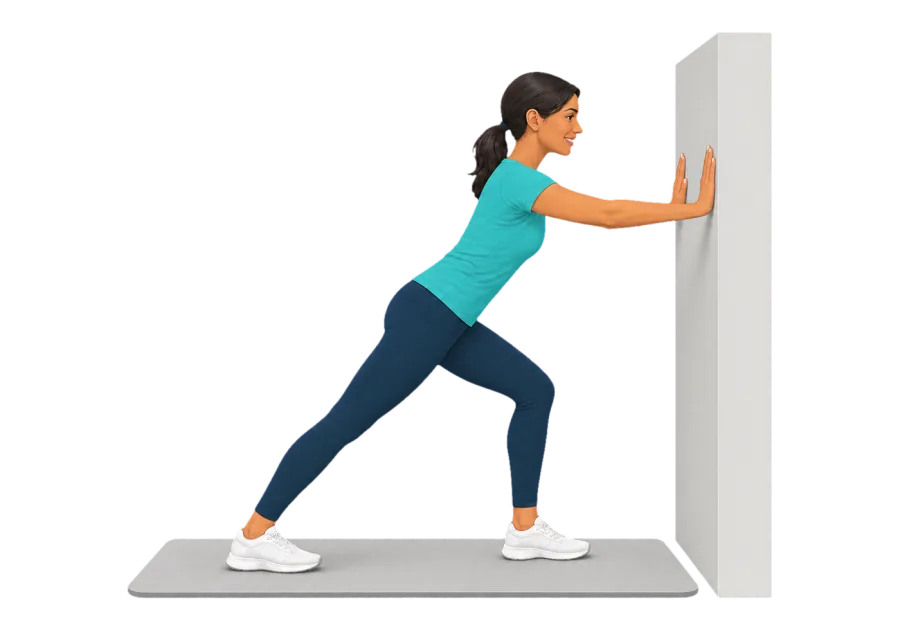
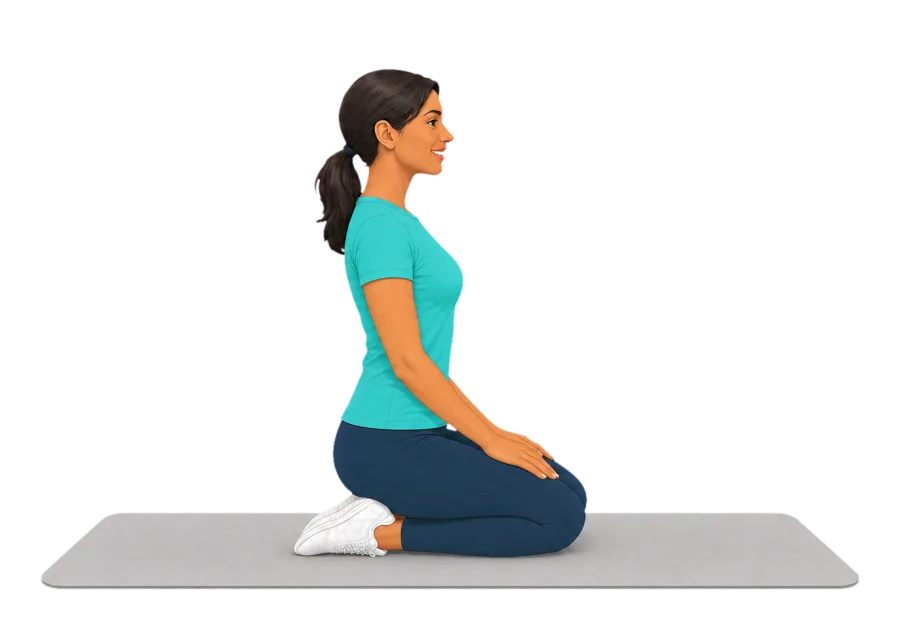
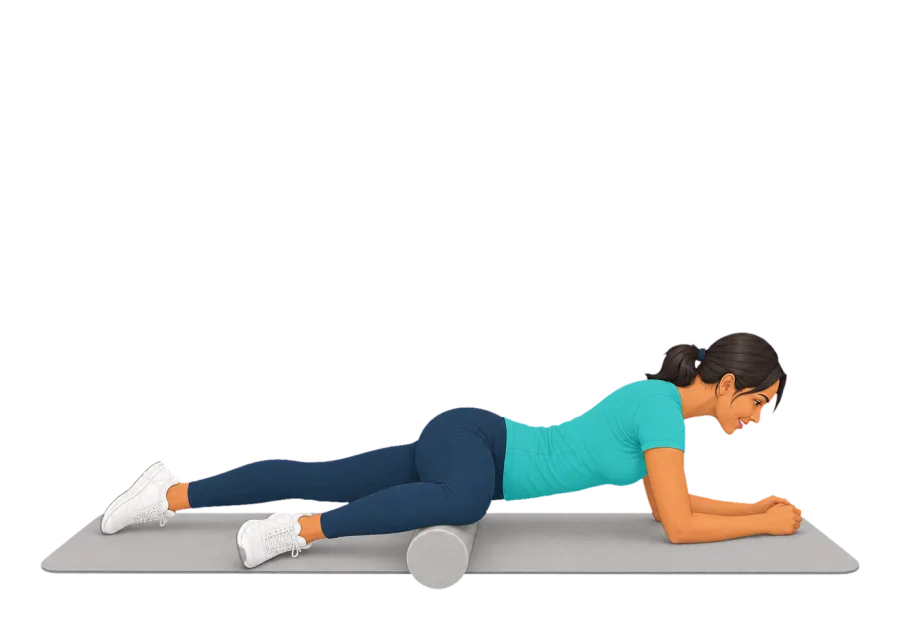
Foam rolling applies the same idea to bigger areas, as in the Quad Roll and Glute Roll. Toe Sit and calf stretches work on the same chain of tissues by stretching it, and that distinction is worth keeping: the Foot Roll compresses, a stretch lengthens.
Routines With This Move
- Calves to Hamstrings
- Fresh Legs
- Long Shift Recovery
- On Your Feet
- Whole Leg Reset
See Also
Sources
- Plantar fascia self-myofascial release with a ball (opens in a new tab). Physitrack.
- The immediate effect of bilateral self myofascial release on the plantar surface of the feet on hamstring and lumbar spine flexibility: A pilot randomised controlled trial (opens in a new tab). Journal of Bodywork and Movement Therapies, 2015.
- Heel pain (opens in a new tab). NHS.
- Plantar fascia (opens in a new tab). Wikipedia.
- Three-dimensional mathematical model for deformation of human fasciae in manual therapy (opens in a new tab). Journal of the American Osteopathic Association, 2008.
- Do Self-Myofascial Release Devices Release Myofascia? Rolling Mechanisms: A Narrative Review (opens in a new tab). Sports Medicine, 2019.
- Reflexology (opens in a new tab). Wikipedia.
- Foam Roller (opens in a new tab). History of Physiotherapy.
- Effects of self-myofascial release: A systematic review (opens in a new tab). Journal of Bodywork and Movement Therapies, 2015.
Further Reading
- Achilles tendon (opens in a new tab). Wikipedia.
- Soleus muscle (opens in a new tab). Wikipedia.
General information about this move, not medical advice. Stop if something hurts, and read our Safety page before you start. If you have a health condition, ask your doctor or physiotherapist first.