What It Is For
The drill takes the two hips through opposite rotations. Seated on the floor with both knees bent to about ninety degrees, one leg is in front and one out to the side. Cleveland Clinic explains that the front leg is in external rotation and the back leg in internal rotation.[1] The switch then rotates both knees across, so each hip visits both positions in turn.
Many stretches work on hip flexion or extension, while this one concentrates on rotation. A Physitrack guide describes the shin box version as a hip mobility and stability exercise used to develop flexibility, balance and coordination.[2] Peloton suggests it for people with tight hips and for runners, cyclists and weightlifters, as part of a warm-up or cool-down.[3]
The app teaches a moving version, in which the rotation comes from the hips and the knees are not twisted. The physical therapist Dawn Lorring describes the static stretch as an extreme one that is not for everyone, and the moving version with hands behind offers a gentler way in.[1]
How to Do It
A seated drill that turns the hips in both directions. Sit with both knees bent to about ninety degrees, one leg in front of you and one out to the side, then rotate your knees across to the other side. Use your hands behind you as much as you need. You should feel the hips rolling smoothly, with no twisting in the knees.
- Both knees bent to ninety
- Use your hands behind you as needed
- Sit tall
Go gently if you have had a hip replacement, and check with your surgeon or physio first.
Pad your knees with a folded towel or cushion. Skip it if kneeling hurts.
How It Got Its Name
The name is a plain description of the two right angles at the knees. Motra records the alternatives 90/90 Stretch, Hip Rotation Stretch and Z Hip Stretch.[4] Shin Box is used in grappling writing and in Physitrack's exercise library, which describes the legs moving in a box-like pattern.[2][5] Who first used either term is not documented.
History
No origin for the drill has been recorded, and searches of clinical, fitness and martial arts writing found no named inventor. The seated position itself is an ordinary way of sitting on the floor, so a single point of origin is unlikely. No source reviewed ties it to any well-known movement teacher.
The term 90/90 also causes confusion. Clinicians use it for measuring hip rotation with the hip flexed to ninety degrees, as in the Brookbush Institute's goniometry material, which is a passive test and not this seated drill.[6] That testing language may have helped the phrase spread, though no source says so directly.
The dated sources found are recent. Medical and fitness publishers were writing about the stretch by about 2021, including Stylist's 2021 article on dynamic 90/90 stretches, Cleveland Clinic in 2022 and Peloton in 2024.[7][1][3] The BJJEE guest article on the shin box dates from 2021.[5] These are not first uses, only the earliest found that carry a clear date. Older use in coaching is likely but undocumented here.
Muscles and Tendons
Cleveland Clinic identifies the gluteus maximus and piriformis as the muscles stretched in the front leg, and the psoas in the back leg.[1] Peloton's guide assigns the groups the other way round, putting the psoas and rectus femoris with the front leg and the gluteals with the back leg.[3] The Cleveland Clinic assignment fits the geometry better: the front hip is flexed and turned out, which lengthens the buttock, while the back hip sits closer to extension, which lengthens the front of the hip. Motra's tool also scores the gluteals highest, followed by the iliopsoas and adductor magnus.[4]
Standard anatomy adds the short external rotators of the back hip, which lengthen as it turns inward. Internal rotation is the less familiar direction, and Cleveland Clinic notes that it can be troublesome for people with hip impingement.[1] The position also asks a lot of the knees if the rotation cannot come from the hip, so the app's cue is to feel the hips rolling with no twist at the knee.
When the drill moves, the picture changes from stretching to control. The deep rotators and gluteal muscles lengthen under tension and then shorten, and the hip flexors help carry the legs across. Sitting tall calls on the spinal extensors and abdominals. Taking the hands away raises this demand considerably, since the trunk has no support.
Stretched
- Gluteus maximus and piriformis
- Front leg, in the externally rotated hip
- Psoas
- Back leg, in the internally rotated hip, especially with the torso upright
- Deep external rotators
- Back leg, as the hip turns inward
- Hip adductors
- Some tension near the end of the rotation
Working
- Deep hip rotators and gluteal muscles
- Control the turn out and turn in of each hip
- Hip flexors
- Lift the legs through the switch, more so when hands-free
- Spinal extensors and abdominals
- Keep the torso tall
Tendons and Fascia
- Hip joint capsule
- The surrounding capsule is taken towards its end range during rotation
Where It Is Used Today
In Brazilian jiu-jitsu, the Singapore gym Evolve MMA recommends the shin box as a warm-up for hip rotation and likens it to a movement used in the S mount position.[5] Physiotherapists can prescribe the shin box through exercise platforms such as Physitrack.[2] In general fitness, it appears in warm-ups and cool-downs for running, cycling and lifting.[3]
Cleveland Clinic advises warming up first and says that the stretch is not recommended for people with hip impingement or a hip or knee replacement.[1] No peer-reviewed study of this drill was found.
Variations and Related Moves
The easiest version uses the hands behind the body and a smaller rotation. Cleveland Clinic adds sitting on a block or pillow and supporting the front knee with a prop.[1] The harder versions remove the hands, pause on each side, or lean the chest forward over the front shin, which Peloton notes changes the intensity.[3] Physitrack lists single-leg work, a resistance band, or a foam roller for support.[2]
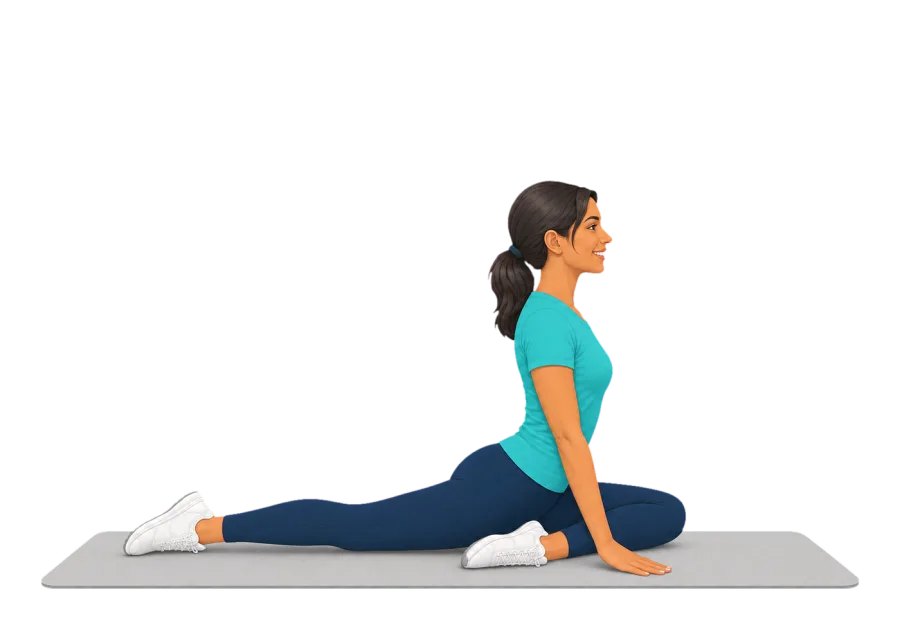
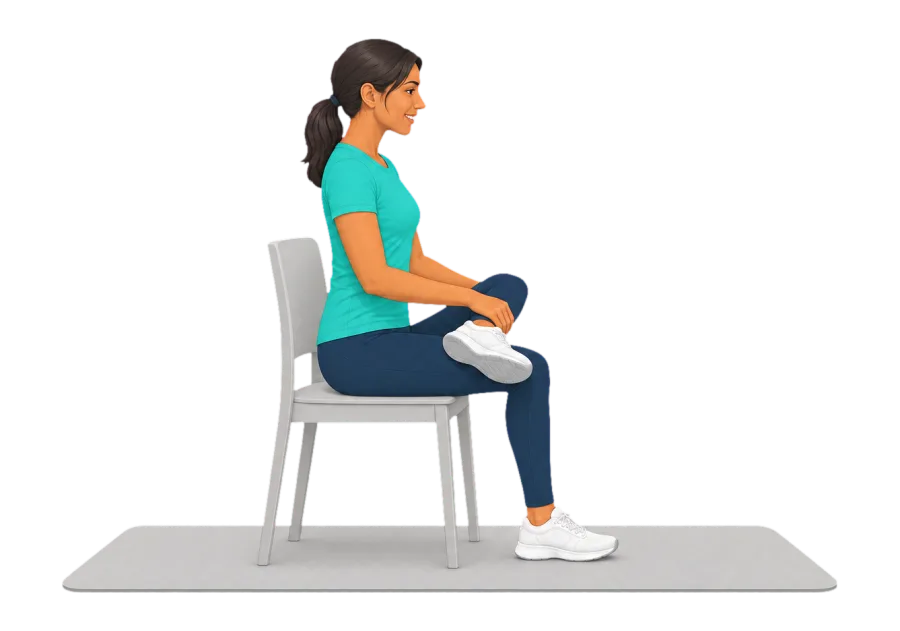
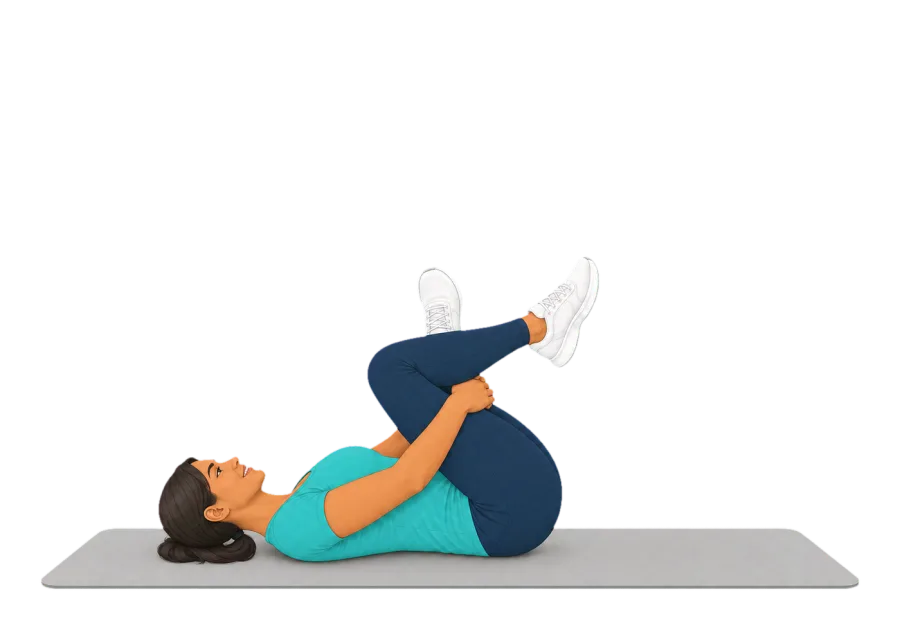
Related moves include Pigeon and the seated and lying Figure Four, which share the turned-out front hip, and Hip Circles, which also take the hip through rotation.
Routines With This Move
- Hips All Round
- Hips for Sitters
- Race Prep: Run, Sled and Lunge
- Squat Depth
See Also
Sources
- What Is the 90/90 Hip Stretch? (opens in a new tab). Cleveland Clinic, 2022.
- How to perform the Shin Box (opens in a new tab). Physitrack.
- The 90/90 Stretch Will Open Up Your Hips, and Increase Your Mobility (opens in a new tab). The Output by Peloton, 2024.
- 90-90 Hip Stretch (opens in a new tab). Motra.
- The Best Exercises To Improve Hip Strength And Mobility For BJJ (opens in a new tab). BJJEE, guest post by Evolve MMA, 2021.
- Hip Internal and External Rotation: Restricting Structures (opens in a new tab). Brookbush Institute.
- Try dynamic 90/90 stretches to improve hip mobility (opens in a new tab). Stylist, 2021.
Further Reading
General information about this move, not medical advice. Stop if something hurts, and read our Safety page before you start. If you have a health condition, ask your doctor or physiotherapist first.