What It Is For
The Counter Stretch uses furniture in place of the floor. With the hands fixed on a counter or desk, the body folds at the hips until the trunk is long, and gravity brings the chest down between the arms. This gives a position close to a forward bend with the arms overhead, without needing to get down to the floor or to carry body weight on the hands.
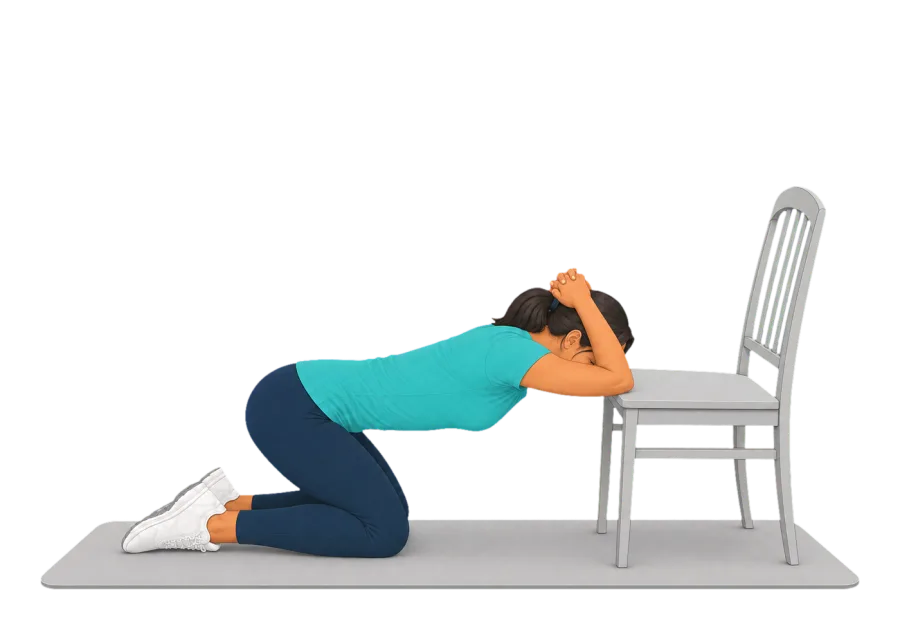
People use it as a quick break from sitting or standing, and it suits those who cannot easily get to the floor. Physical therapists at Hinge Health describe standing at a counter as one way of adapting Child's Pose, which is usually done on the floor.[1] Raising the hands makes the stretch easier and lowering them makes it stronger, because a lower surface asks for more hinge at the hip.
How to Do It
A standing stretch for your back and the backs of your legs, using a kitchen counter or desk. Place your hands on the edge, walk your feet back and hinge forward until your back is long, letting your chest sink. Soften your knees if you need to. You should feel a long stretch from your armpits to your hamstrings.
- Hands on a counter
- Walk back, hinge forward
- Let the chest sink
This move puts your head below your heart. Skip it if you have high blood pressure or glaucoma, or come up slowly.
How It Got Its Name
The name simply states the equipment. It has no recorded origin, and other teachers describe the same shape in other words. The move is a supported hip hinge, with the weight on the feet and not on the arms.
History
No inventor or first description of the Counter Stretch has been found, and it is unlikely that one exists in any meaningful sense, since it is the kind of position people find by leaning on a kitchen worktop. What can be traced is the history of related positions.
In yoga, the standing forward fold in its modern form is a twentieth-century pose. It appears in Krishnamacharya's Yoga Makaranda of 1934 and in the works of his pupils, including B. K. S. Iyengar's Light on Yoga of 1966, and a differently shaped pose with the same name is illustrated in the nineteenth-century Sritattvanidhi.[4] A halfway stage, Ardha Uttanasana, holds the trunk horizontal with the palms on the calves, which is close to the shape of the Counter Stretch without the support.[4]
Support itself has its own history. Iyengar is credited with pioneering the use of props so that beginners, older people and those with physical limitations could reach positions more easily.[5] Separately, ballet training uses a waist-high rail, the barre, for slow exercises at the start of class, including stretching.[6] Neither tradition is documented as the source of this stretch, and the resemblance is one of shape only.
Muscles and Tendons
Two long chains are put under gentle tension. In the upper body, the latissimus dorsi arises from the lower thoracic and lumbar spine, the thoracolumbar fascia, the iliac crest and the lower ribs, and inserts on the humerus. It adducts, extends and internally rotates the arm, so raising the arm overhead lengthens it.[2] This is why the stretch can be felt from the armpit down toward the lower back. Teres major, which inserts close by, shares the same line of pull.[2]
In the lower body, the three hamstrings, the semimembranosus, semitendinosus and biceps femoris, arise from the ischial tuberosity and cross both the hip and the knee.[3] A hinge at the hip lengthens them, and bending the knees slackens them, which explains why softening the knees reduces the feeling at the back of the thigh. The muscles holding the position work only lightly.
Stretched
- Latissimus dorsi
- Lengthened from armpit to lower back as the arms reach overhead relative to the trunk
- Hamstrings
- Lengthened across the back of the hip as the pelvis hinges, more so with straighter knees
- Teres major
- Lengthened with the latissimus dorsi as the shoulder flexes
- Calves
- Mild stretch when the knees are straight
Working
- Quadriceps
- Light effort to hold the legs steady
- Spinal extensors
- Light effort to keep the back long
- Shoulder stabilisers
- Steady the arms against the counter
Tendons and Fascia
- Thoracolumbar fascia
- The latissimus dorsi reaches the lumbar and sacral spine through it, so tension may be felt in the lower back
Where It Is Used Today
The stretch is used in home routines and in exercise advice from physical therapists, where a counter is a convenient alternative to the floor.[1] It suits people who spend long periods at a desk, since the desk itself can serve as the support. A wall, a chair back or a ballet barre can stand in for the counter, although any support must be stable and not likely to slide.
Its adoption is informal. It does not form part of any named test, curriculum or professional standard found in the sources consulted.
Variations and Related Moves
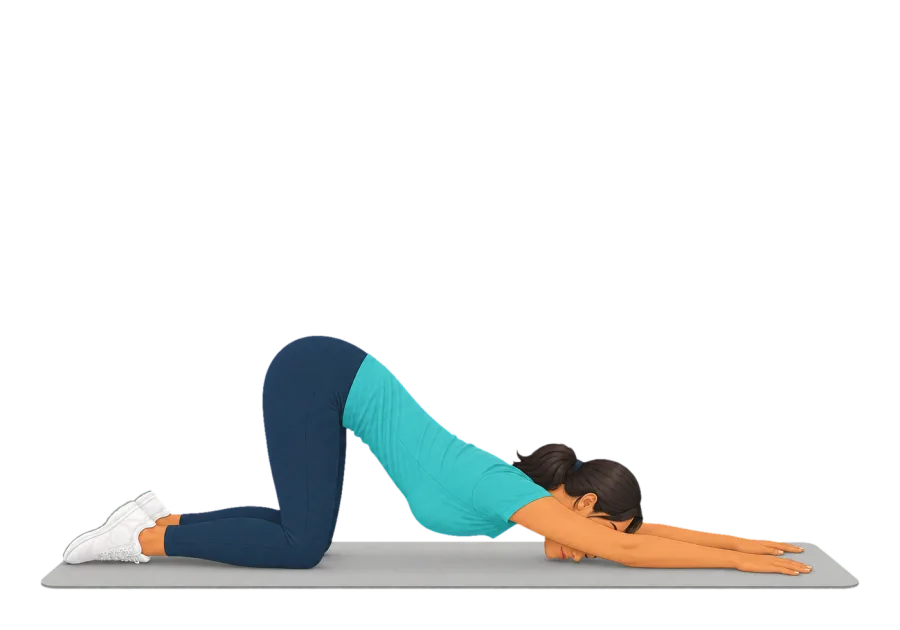
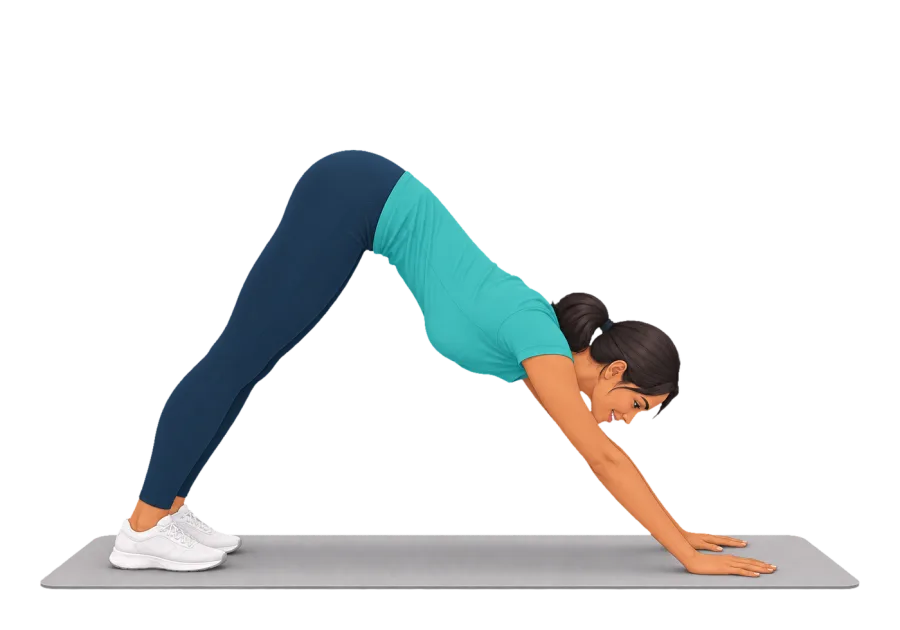
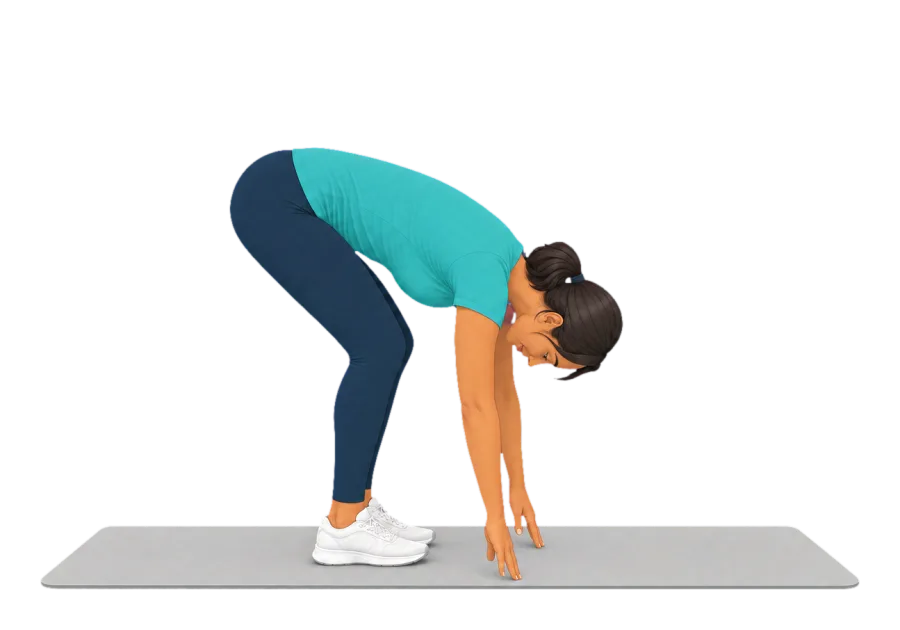
Hands higher makes the stretch easier and hands lower makes it stronger. Bending the knees shifts the feeling away from the hamstrings and toward the back. Puppy Pose gives a similar shoulder and upper back stretch on the floor with the hips above the knees, while Downward Dog is the same long line with the arms carrying weight. The Half Split and Forward Fold are closer to pure hamstring stretches.
Routines With This Move
- Long Shift Recovery
- On Your Feet
- Steady and Strong, Longer
See Also
Sources
- 6 Thoracic Mobility Exercises for Back Flexibility and Pain Relief (opens in a new tab). Hinge Health.
- Latissimus dorsi muscle (opens in a new tab). Wikipedia.
- Hamstring (opens in a new tab). Wikipedia.
- Uttanasana (opens in a new tab). Wikipedia.
- Iyengar Yoga (opens in a new tab). Wikipedia.
- Barre (ballet) (opens in a new tab). Wikipedia.
Further Reading
General information about this move, not medical advice. Stop if something hurts, and read our Safety page before you start. If you have a health condition, ask your doctor or physiotherapist first.